Eduo
Log in Sign up
The Road to Character
📰 Article

The Road to Character

#1 NEW YORK TIMES BESTSELLER • David Brooks challenges us to rebalance the scales between the focus on external success—“résumé virtues”—and our core principles. NAMED ONE OF THE BEST BOOKS OF THE YEAR BY THE ECONOMIST With the wisdom, humor, curiosity, and sharp insights that have brought millions of readers to his New York Times column and his previous bestsellers, David Brooks has consistently illuminated our daily lives in surprising and original ways. In The Social Animal, he explored the neuroscience of human connection and how we can flourish together. Now, in The Road to Character, he focuses on the deeper values that should inform our lives. Looking to some of the world’s greatest thinkers and inspiring leaders, Brooks explores how, through internal struggle and a sense of their own limitations, they have built a strong inner character. Labor activist Frances Perkins understood the need to suppress parts of herself so that she could be an instrument in a larger cause. Dwight Eisenhower organized his life not around impulsive self-expression but considered self-restraint. Dorothy Day, a devout Catholic convert and champion of the poor, learned as a young woman the vocabulary of simplicity and surrender. Civil rights pioneers A. Philip Randolph and Bayard Rustin learned reticence and the logic of self-discipline, the need to distrust oneself even while waging a noble crusade. Blending psychology, politics, spirituality, and confessional, The Road to Character provides an opportunity for us to rethink our priorities, and strive to build rich inner lives marked by humility and moral depth. “Joy,” David Brooks writes, “is a byproduct experienced by people who are aiming for something else. But it comes.” Praise for The Road to Character “A hyper-readable, lucid, often richly detailed human story.”—The New York Times Book Review “This profound and eloquent book is written with moral urgency and philosophical elegance.”—Andrew Solomon, author of Far from the Tree and The Noonday Demon “A powerful, haunting book that works its way beneath your skin.”—The Guardian “Original and eye-opening . . . Brooks is a normative version of Malcolm Gladwell, culling from a wide array of scientists and thinkers to weave an idea bigger than the sum of its parts.”—USA Today

Philosophy Religion & Spirituality Personal Development
17 ideas 17.7K reads
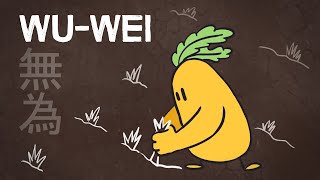
Wu-wei | The Art of Letting Things Happen
📰 Article

Wu-wei | The Art of Letting Things Happen

Despite humanity’s technological developments and will to progress, we’re still utterly dependent on nature. Human effort has its limitations and is always in conjunction with nature. We cannot grow a plant, for example, completely isolated from natural growth, even though we can influence and manipulate it.<br><br>The reputed author of the Tao Te Ching, Lao Tzu, stated that the world governs itself. It doesn’t need our intervention. As Lao Tzu wrote: “When you arrive at non-action, nothing will be left undone.” End quote. This idea resembles the basic understanding of the paradoxical concept “wu-wei.” <br>But when we look for a definition of wu-wei, we quickly discover that there isn’t one fixed meaning.<br><br>Some translate wu-wei as “non-action,” or “doing nothing,” others as “actionless action,” and others as “effortless action.”<br>We find out that Taoism offers several layers, if you will, regarding how wu-wei can enhance our relationship with the world. And how this ancient art of “letting things happen” doesn’t necessarily make us passive, ignorant bystanders but can actually improve how we act, leading to better outcomes.<br><br>This video (Wu-wei | The Art of Letting Things Happen) serves as a humble attempt to make the depth of this philosophical idea clear and practical.<br><br>Support the channel:<br>✔️ PayPal: https://www.paypal.me/einzelgangerco<br>✔️ Patreon: https://www.patreon.com/einzelgangster<br>✔️ Bitcoin: 3HQnEz1LQ4G6dqN2LdZgzc7qoJjJCyWjTC<br>(Donated BTC and want in the credits? Send me an email with the amount/address)<br><br>🎞️ Animations by Munkaa:<br>https://www.youtube.com/user/jus7y<br><br>Purchase Stoicism for Inner Peace (affiliate links):<br>📘 Paperback: https://amzn.to/3wB9iHb<br>💻 Ebook: https://amzn.to/2RdjbKV<br><br>Purchase Unoffendable (affiliate links):<br>📘 Paperback: https://amzn.to/2RJYfti<br>💻 Ebook: https://amzn.to/35e23a5<br><br>Merchandise:<br>🛍️ Shop: teespring.com/stores/einzelgangerstore<br>🛍️ Merchandise design by Punksthetic Art:<br>https://www.youtube.com/user/JRStoneart<br><br>All music used is licensed and paid for.<br><br>Creative Commons (attributions):<br><br>Laozi (1): https://commons.wikimedia.org/wiki/File:Ping_Sien_Si_-_016_Lao_zi_(16135526115).jpg<br>Laozi (2): https://commons.wikimedia.org/wiki/File:Statue_of_Lao_Tzu_in_Quanzhou.jpg<br>Laozi (3): https://commons.wikimedia.org/wiki/File:Netsuke,_elderly_man_(51370482573).jpg<br>Confucius (1): https://commons.wikimedia.org/wiki/File:Great_Confucian_Figures_-_Painting_of_Kongzi_by_Kan%C5%8D_Sansetsu.jpg<br>China painting: https://commons.wikimedia.org/wiki/File:MS-SchwarzlacktablettGoldeneLackmalereiLushan1595-03.JPG<br>Zhuangzi: https://commons.wikimedia.org/wiki/File:Wang_Jianzhang_-_Solitary_Colors_of_the_Autumn_Woods_-_1972.68_-_Cleveland_Museum_of_Art.tif<br><br>#TAOISM #WUWEI #LAOTZU<br><br>00:00 - Intro<br>02:05 - Wrestling with nature<br>05:19 - Acting for the act itself<br>07:57 - The uncarved block

Philosophy Religion & Spirituality Personal Development
9 ideas 20.8K reads
Blink
📰 Article

Blink

From the #1 bestselling author of The Bomber Mafia, the landmark book that has revolutionized the way we understand leadership and decision making. In his breakthrough bestseller The Tipping Point, Malcolm Gladwell redefined how we understand the world around us. Now, in Blink, he revolutionizes the way we understand the world within. Blink is a book about how we think without thinking, about choices that seem to be made in an instant--in the blink of an eye--that actually aren't as simple as they seem. Why are some people brilliant decision makers, while others are consistently inept? Why do some people follow their instincts and win, while others end up stumbling into error? How do our brains really work--in the office, in the classroom, in the kitchen, and in the bedroom? And why are the best decisions often those that are impossible to explain to others? In Blink we meet the psychologist who has learned to predict whether a marriage will last, based on a few minutes of observing a couple; the tennis coach who knows when a player will double-fault before the racket even makes contact with the ball; the antiquities experts who recognize a fake at a glance. Here, too, are great failures of "blink": the election of Warren Harding; "New Coke"; and the shooting of Amadou Diallo by police. Blink reveals that great decision makers aren't those who process the most information or spend the most time deliberating, but those who have perfected the art of "thin-slicing"--filtering the very few factors that matter from an overwhelming number of variables.

Philosophy Problem Solving Books
10 ideas 23.8K reads

Are you sure?