Be Mine: A Brief History of Valentine's Day Marketing
Curated from: blog.hubspot.com
Ideas, facts & insights covering these topics:
6 ideas · 940 reads
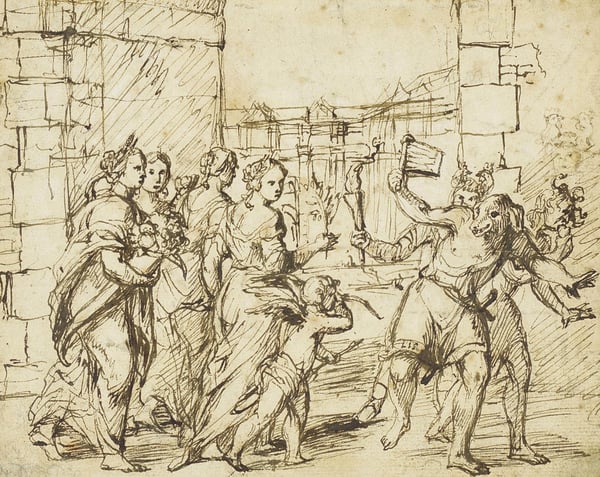
The roots of Valentine's day lie in ancient Rome
The ancient Roman festival Lupercalia took place annually on February 15 and involved primitive forms of courtship and matchmaking.
St. Valentine was also executed on February 14, around 278 A.D. Legend has it that he befriended the jailer's daughter and wrote a letter to her the night before his execution, then signed it, "From Your Valentine."
Two centuries later, Pope Gelasius ordered that Lupercalia be replaced with February 14, observing St.Valentine's Day.
The Romans also constructed the idea of Cupid, a god of love, which was adapted from Eros, a Greek god of passion and fertility.
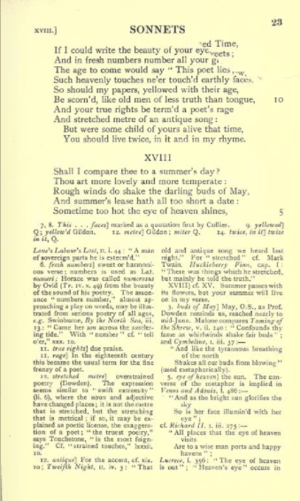
Shakespeare and Chaucer in love
Valentine's Day first became romanticiced by classic authors.
Chaucer (1300s)
Chaucer's epic poem The Parliament of Fowls referenced "Seynt Valentynes day."
Shakespeare (16th century)
Shakespeare popularised love with his "Sonnet 18" "Shall I compare thee to a summer's day?" In Hamlet, the character Ophelia recites a song about a young lady's experience with the holiday, "Tomorrow is Saint Valentine's day," and "To be your Valentine."
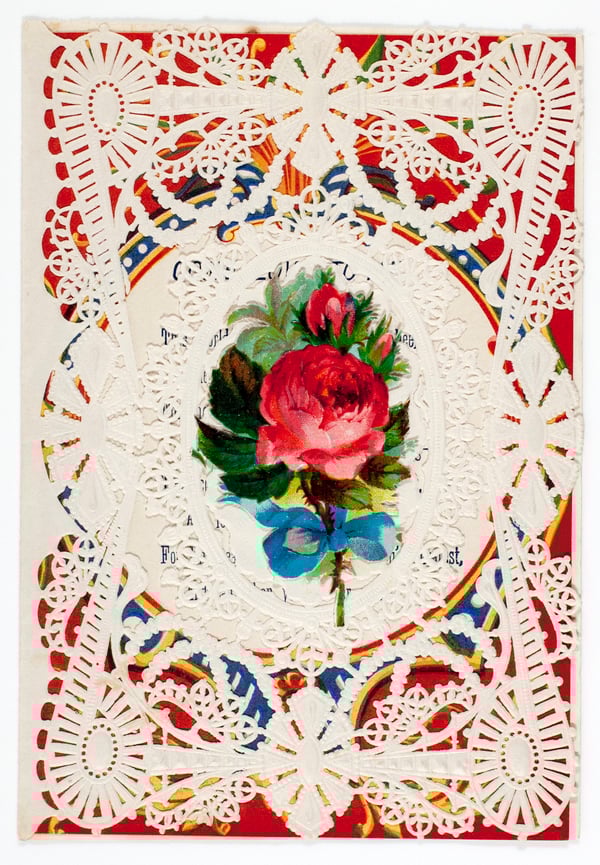
The 17th Century and Beyond
By the 1700s, Valentine's Day made its way to the United States. It became traditional for friends and lovers of all social classes to exchange small tokens of affection or handwritten notes. In England, the Industrial Revolution eventually included the production of fancy valentines.
When American Esther Howland received her first English valentine greeting in 1847, she believed there would be an American market for these formal, English-style greetings. She created the earliest American Valentine's Day greeting cards.
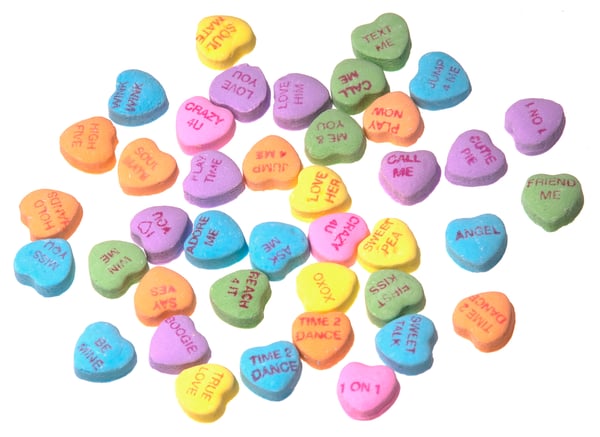
Valentine's Day marketing 1700 - 1800s
- 1714: Charles II of Sweden started communicating with flowers. This tradition set the stage for red flowers to be exchanged for Valentine's Day.
- 1822: The Cadbury chocolate company sells the first heart-shaped box of chocolates.
- 1849: Howland hopes to earn $200 with Valentine's Day cards but instead earns 25X.
- 1866: Conversation candies are developed.
- 1870: Howland incorporates her booming card business as the New England Valentine Company. In 1881, she sold her company to George C. Whitney Company.
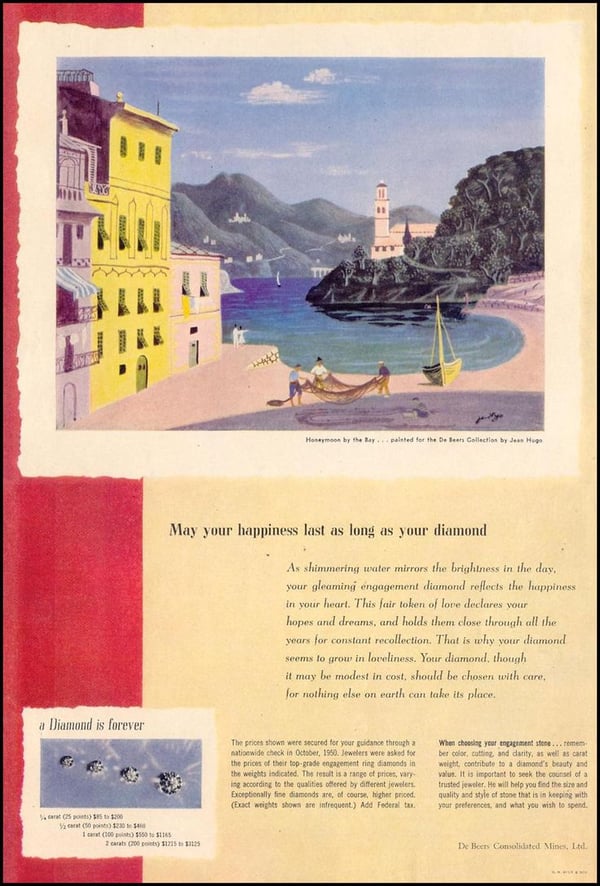
Valentine's Day marketing 1900s
- 1902: Conversation candies become heart-shaped.
- 1906: American Greetings was founded and eventually became one of Whitney's chief competitors.
- 1910: Hallmark is founded.
- 1913: Hallmark produces its first Valentine's day card.
- 1948: The De Beers diamond company launched its "A Diamond is Forever" campaign, promoting the message that jewellery can be used to express love.
- 1986: Hershey's began packaging Kisses candies in pink and red foil for Valentine's day.

Valentine's Day marketing 2000s
- 2004: Marketers continue to embrace the media, and an influx of high-quality and high-budget commercials mark the holiday. One iconic commercial was the mini-romance drama Le Film that promoted Chanel No. 5 perfume.
- 2005: YouTube was invented because "three guys on Valentine's Day had nothing to do."
- 2013: Uber tolls out "Romance on Demand," allowing users to send flowers on Valentine's Day via the app.
- 2018 - present day. Valentine's Day marketing campaigns have gone mostly digital with a strong social media presence.