Zero to One: How to Build the Future
Curated from: books.google.com
Ideas, facts & insights covering these topics:
11 ideas · 38.9K reads
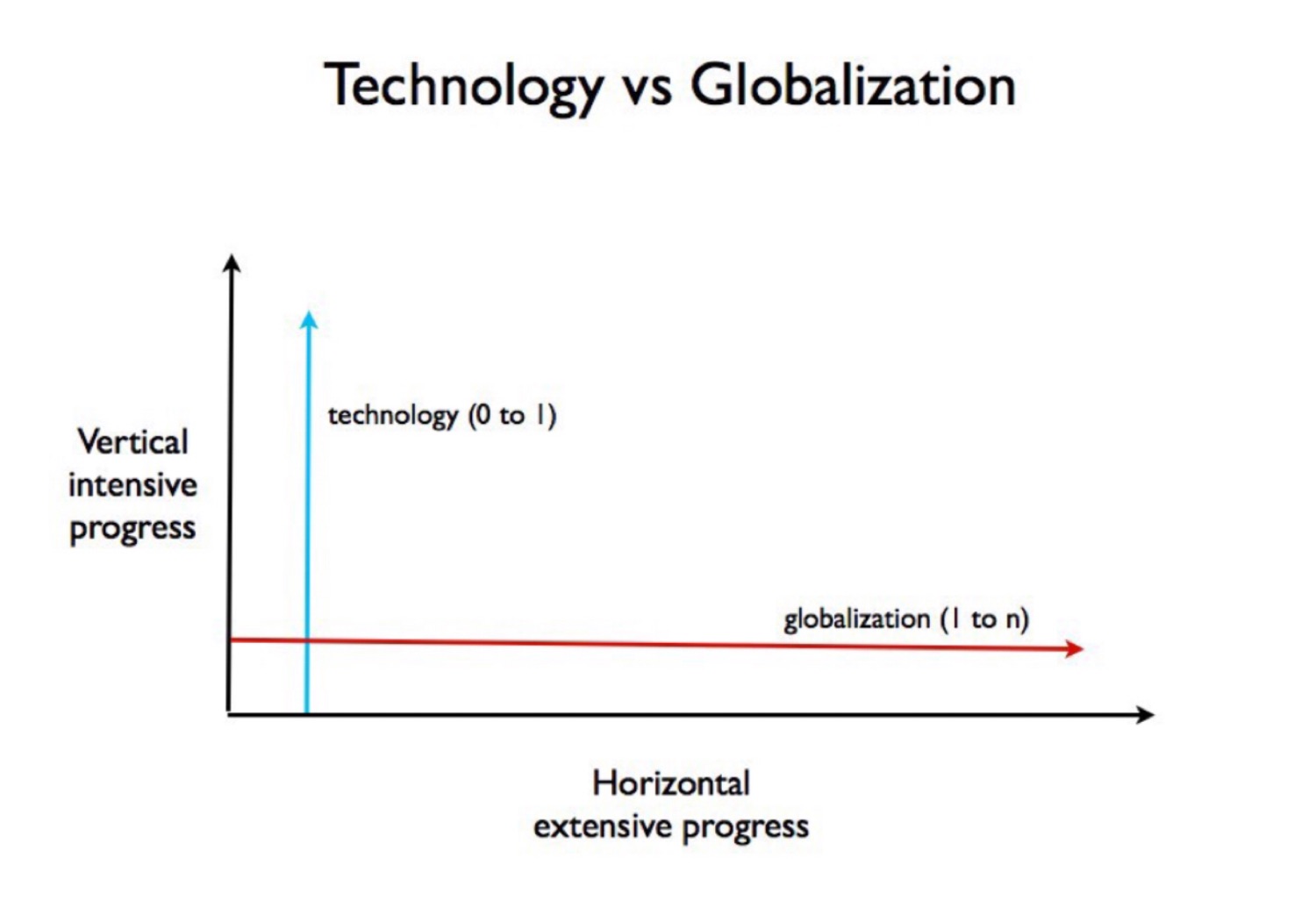
Horizontal Vs Vertical Progress
- Horizontal or extensive progress means copying things that work— going from 1 to n.
- Vertical or intensive progress means doing new things— going from 0 to 1.
Vertical progress is more challenging. You have to imagine something that doesn’t exist yet, but it has greater potential rewards. Peter believes that only those who can think outside the box established conventions can understand and change the future.

“Every moment in business happens only once. The next Bill Gates will not build an operating system. The next Larry Page or Sergey Brin won’t make a search engine. And the next Mark Zuckerberg won’t create a social network. If you are copying these guys, you aren’t learning from them.”

How You Can Be The Architect of Your Own Future
- Being the architect of your own future involves attempting to create the best future for you.
- Peter describes future success as being a product of focus, dedication, and determination. You have to forget about the ideas of fate and luck. Those who are consistently successful create their luck through their actions.

On “Lean Startup” Dogmas
Making small changes to things that already exist might lead you to a local maximum, but it won’t help you find the global maximum.
- It is better to risk boldness than triviality
- An imperfect plan is better than no plan
- Competitive markets destroy profits
- Sales matter just as much as products

Competition Is For Losers
The importance of moving away from the idea of healthy competition is that competition means there will be no capital left for you. The rest of the capital ‘pie’ will be eaten by your competitors. Therefore, Peter emphasizes the importance of building a monopoly.

Importance Of Planning
- We overrated the power of chance and underrated the importance of planning.
- If you want an effective board, keep it small.
- Eliminating competition makes it easier for everyone to build the kinds of long-term relationships that transcend mere professionalism.
- The equation for the value of a business today is the value of earnings in the future.

Follow The Money
Rule 1 : Only invest in companies that have the potential to return the value of the entire fund.
Rule 2 : Because rule one is so restrictive, there can’t be any other rules.

7 Questions That Every Business Must Answer
1. The Engineering Question: Can you create breakthrough technology instead of incremental improvements?
2. The Timing Question: Is now the right time to start your particular business?
3. The Monopoly Question: Are you starting with a big share of a small market?
4. The People Question: Do you have the right team?
5. The Distribution Question: Do you have a way to not just create but deliver your product?
6. The Durability Question: Will your market position be defensible 10 and 20 years into the future?
7. The Secret Question: Have you identified a unique opportunity that others don’t see?

”All happy companies are different: each one earns a monopoly by solving a unique problem. All failed companies are the same: they failed to escape competition.”

What Defines A Monopoly?
- Proprietary technology (10 times better than any existing solution),
- Network effect (start with a hyper-niche market. If you think its too big it is),
- The economy of scale (SaaS vs employee labor-intensive),
- Excellent Branding (Apple Branding to stay continual trend).

To Construct An Effective Company Culture
- Imagery: Using branded clothing and other items/events help show others in your company that you belong in the same tribe and shows commitment.
- Slogans: Slogans, catch-phrases, and idioms are great tools to build strong relations among members of the team.
- Advocacy: This is essentially advocating and broadcasting the main problem you aim to focus on tackling (usually mission), in addition to philanthropic-like activities.
- Obsession: Find like-minded people — simple. Use active employees to recruit other like-minded people who are equally obsessed with solving the same problem as you.