Expert Secrets Summary
 Curated from:
fourminutebooks.com
Curated from:
fourminutebooks.com
Ideas, facts & insights covering these topics:
16 ideas · 672 reads
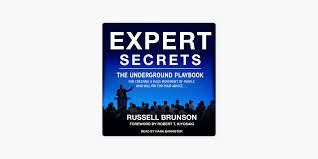
Expert Secrets – Book Summary
Expert Secrets teaches you how to create and implement an informative marketing plan and putting it into practice, while also showing you what problem you must solve for your prospects or teach them how to do it themselves.
When it comes to business and marketing, the process of turning an idea into practice can be quite lengthy and challenging. Fortunately, Expert Secrets can teach you all about it – and more. The book is packed with proven practices that turn any marketing plan into an instant success.
If you want to learn a step-by-step process on how to create a marketing plan that sells and has prospects come your way, look no more because we’re about to jump right into it in the following lines.
For now, here are three of the most relevant lessons from the book:
- The first ten secrets of this book teach you how to create a mass movement and have everyone believe in your pitch.
- A perfect webinar starts from a rapport and ends with a pitch that sells.
- The five-email-sequence will help you build and implement the most successful email campaign you’ve seen.
Now, let’s explore these lessons in detail and see how they can help you learn and practice marketing like a pro.
Lesson 1: The first ten secrets of the book are the most powerful tools for everyone looking to build a pitch that sells.
- The first secret is to create an attractive or charismatic leader that’s the face of your product. Brand yourself around a niche.
- The second secret is to glorify your cause and build a movement or a cult around it. Make it seem big and important.
- The third one is to turn the first two into a vehicle of change. Make your branded persona and your offerings look like a huge opportunity.
- The fourth secret is strictly related, as it implies building early results by giving people what they want.
- The fifth secret is the big domino. In this part of your marketing plan, your aim is to make everything else seem irrelevant compared to your offering.
- The sixth secret implies taking prospects from emotions to ration by explaining how you were one of them, but after this product, you’ve changed.
- The seventh idea presented tells you how to present yourself as a hero who’s been through a lot of change and became a new person.
- The eighth secret explains how you can bridge all your stories, from your modest beginning to your highest achievement.
- The ninth secret is about changing their false beliefs by acknowledging that you too had them at some point, but managed to overcome them.
- Lastly, the tenth secret is to answer your prospect’s questions and internal and external struggles.
Lesson 2: To build the perfect webinar, you’ll have to follow these four steps.
When you’re making a webinar, you have to think about 4 different elements:
- Build rapport
- Emphasize the One Thing
- The Three Secrets (vehicle, internal and external struggles)
- Stack the deck for sale
When you’re planning your webinar, the first thing you need to do is build rapport. This is a simple way of saying that you need to make people feel comfortable with you so they’ll listen to what you have to say.
The second element of a successful webinar is to emphasize One Thing. This should be the central focus of your presentation and can help guide the entire presentation, as well as give attendees something concrete to take away from it.
The third element is The Three Secrets: Vehicle (your product), Internal Struggles (problems that your product solves), and External Struggles (the competition). These three elements will help your audience understand why their lives will be better if they purchase your product.
The final element is Stacking the Deck for Sale: this means making it easy for attendees to buy from you during or after the webinar. You can do this by providing links, offering discounts on products or services, offering a free trial, and having contact information available at all times.
Lesson 3: If you want to build a successful email campaign, try the five-email-sequence first.
This 5-email sequence is about the origin story, a new opportunity, internal belief change, external belief change, and the stack or sales.
The origin story is an email that outlines how you found your product. You can use this email to provide some context for how you got into the business, or how you found your new company. This email should be short and sweet because it’s just an introduction to what comes next.
The second email explains the new opportunity that has been presented to you. This is where you talk about what happened and how it will affect you personally and professionally. If any changes in your life or career resulted from this opportunity, this is where you explain them!
After that comes the internal belief change: why does this opportunity make sense to me? Why do I feel like it’s worth pursuing? What does it mean for my future? How am I going to approach it? This is where you write about any internal shifts or challenges that come with taking on this new opportunity.
Next comes the external belief change: what does this opportunity mean for other people? What does it mean for our team? For our organization? For our industry as a whole? Make this part about other stakeholders in particular.
Lastly, the stack or the sales is where you get to pitch and monetize your offerings, but not before they realize how much money they’ll make for believing in you. This part is about mutual growth and it tells people that they need to invest in themselves by investing in you.
Expert Secrets – Book Review
Expert Secrets is a book that offers tips and tricks for anyone who wants to make money online. It has been called one of the best books on Internet marketing, especially since it gives you a complete system of how to get started making money online today, without any prior experience with making money online or starting an online business.
You’ll learn how to create an irresistible offer that will sell itself without even having to be sold because it speaks directly to them! In addition, you’ll learn how to create a sales funnel that sells each of your products three times more often without any extra effort on your part!
Who would I recommend the Expert Secrets to?
The 27-year-old start-up founder, the 24-year-old graduate student who wants to start making money online, or the 35-year-old marketer and blogger who wants to monetize and scale their side gig.
Author Quote
“Showing them that it didn’t just work for you, but it also worked for people just like them, is the key to getting them to believe in your framework”
-Russell Brunson