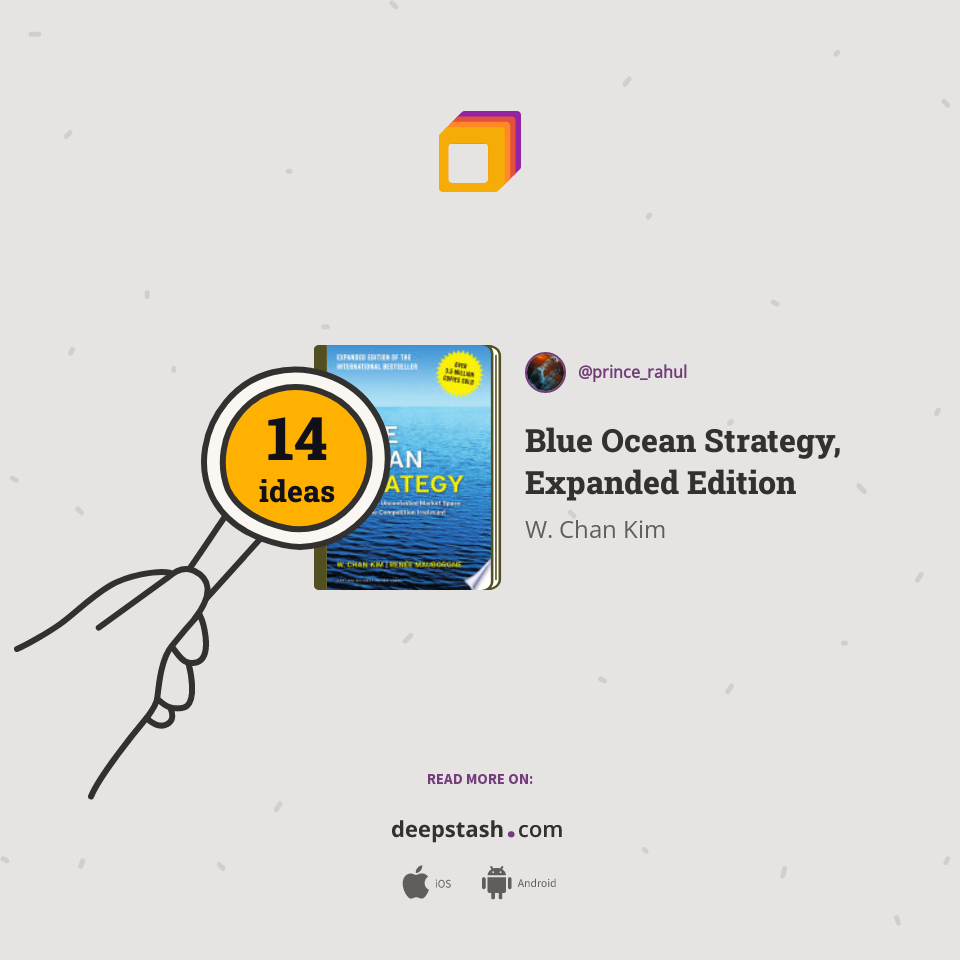
Blue Ocean Strategy, Expanded Edition
Curated from: books.google.com
Ideas, facts & insights covering these topics:
16 ideas · 4.1K reads
Red Vs Blue Oceans
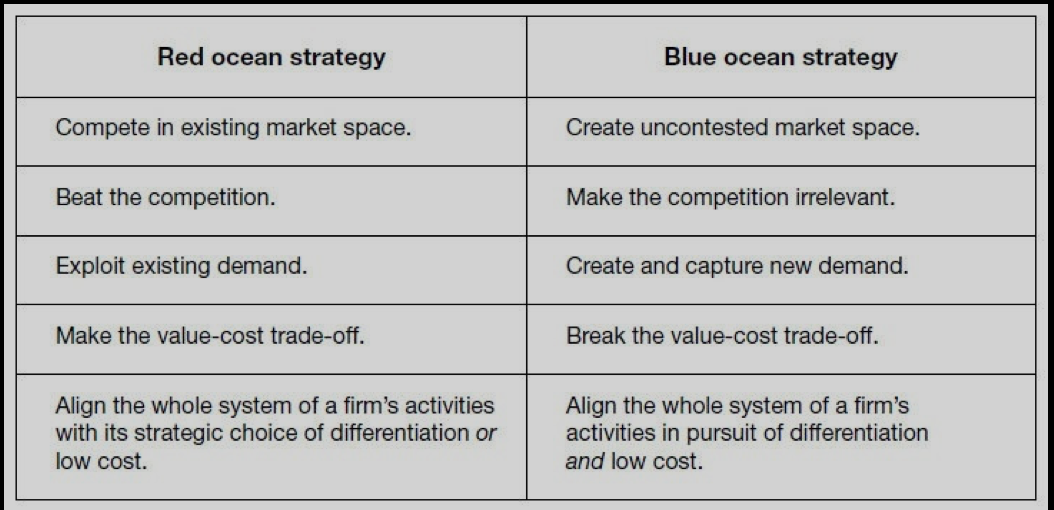
Imagine a market universe composed of two sorts of oceans: red oceans and blue oceans. In the red oceans, companies try to outperform their rivals to grab a greater share of existing demand. As the market space gets crowded, prospects for profits and growth are reduced. Blue oceans, in contrast, are defined by untapped market space, demand creation, and the opportunity for highly profitable growth. In blue oceans, competition is irrelevant because the rules of the game are waiting to be set.
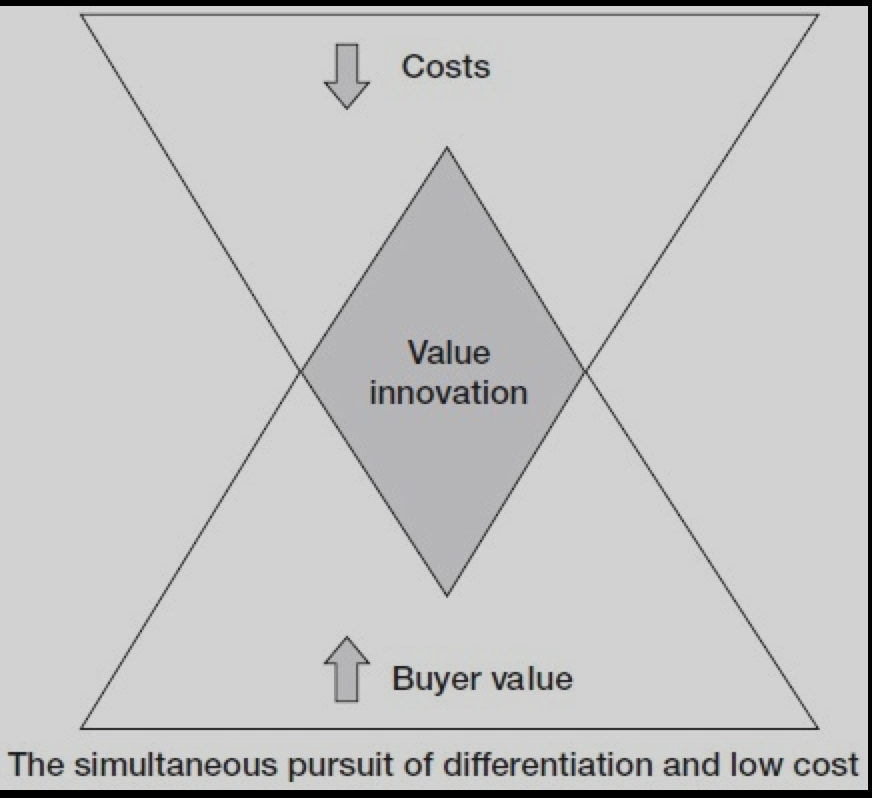
Value Innovation: The Cornerstone of Blue Ocean Strategy
- It is called value innovation because instead of focusing on beating the competition, you focus on making the competition irrelevant by creating a leap in value for buyers and your company, thereby opening up new and uncontested market space.
- Value innovation places equal emphasis on value and innovation.
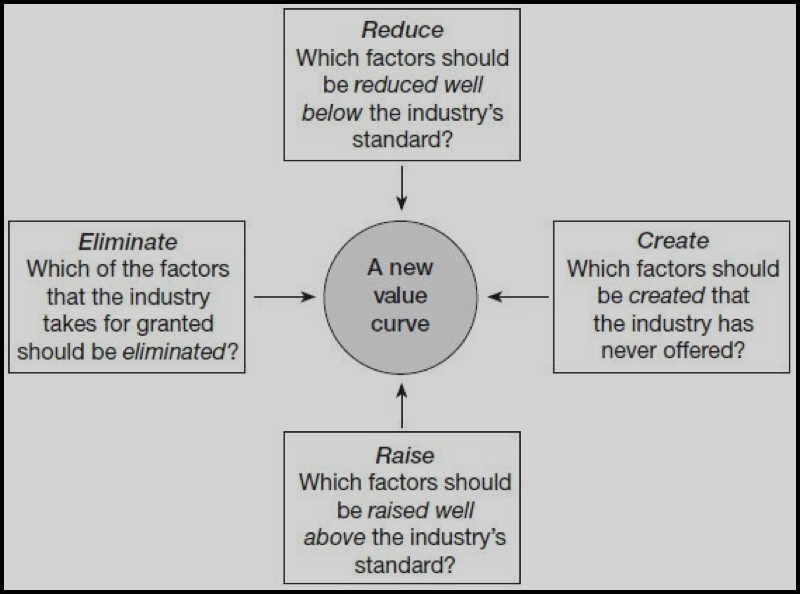
The Four Actions Framework For Creating Blue Ocean
- Eliminate
- Reduce
- Raise
- Create
- To value-innovate, the company must decide which factors to eliminate and reduce and not only those to raise and create-to construct a divergent value curve.
- By focusing on the key factors that lead buyers to trade across alternative industries and eliminating or reducing everything else, you can create a blue ocean of new market space.
Three Characteristics of a Good Strategy
- An effective blue ocean strategy has three complementary qualities: focus, divergence, and a compelling tagline.
- Compelling Tagline: A good tagline must not only deliver a clear message but also advertise an offering truthfully, or else customers will lose trust and interest.
Examples:
- MasterCard: “There Are Some Things Money Can’t Buy. For Everything Else, There’s MasterCard.”
- BMW: “The Ultimate Driving Machine”
- M&Ms: “Melts in Your Mouth, Not in Your Hands.”
Focus,Divergence And Compelling Tagline
- When a company’s value curve lacks focus, its cost structure will tend to be high and its business model complex in implementation and execution.
- When it lacks divergence, a company’s strategy is a me-too, with no reason to stand apart in the marketplace.
- When it lacks a compelling tagline that speaks to buyers, it is likely to be internally driven or a classic example of innovation for innovation’s sake with no great commercial potential (i.e value).
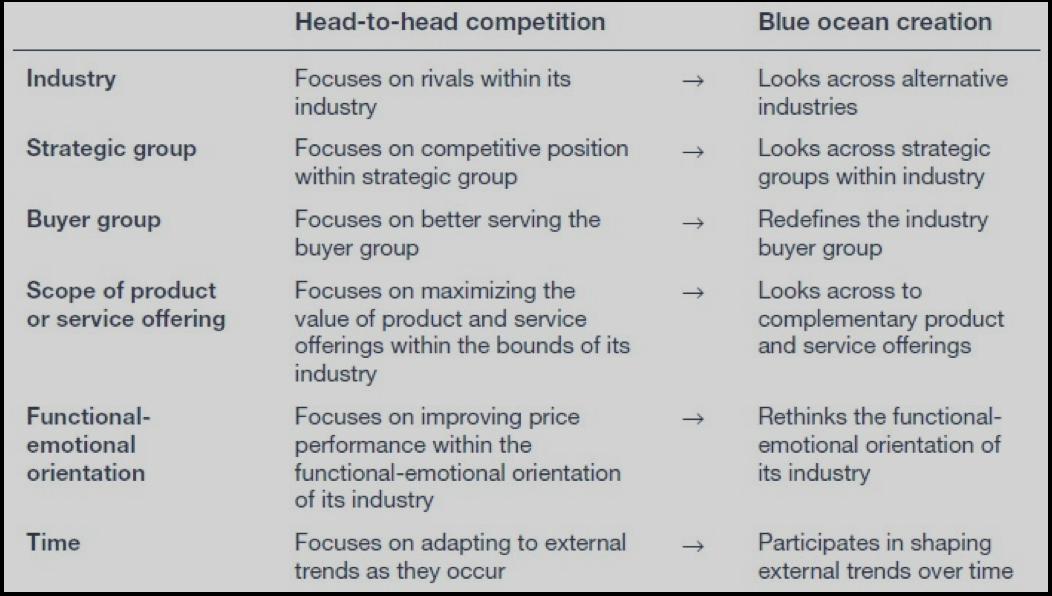
Look Across Functional or Emotional Appeal to Buyers
- Emotionally oriented industries offer many extras that add price without enhancing functionality. Stripping away those extras may create a fundamentally simpler, lower-priced, lower-cost business model that customers would welcome.(Emotional to Functional)
- Conversely, functionally oriented industries can often infuse commodity products with new life by adding a dose of emotion and, in so doing, can stimulate new demand.(Functional to Emotional)
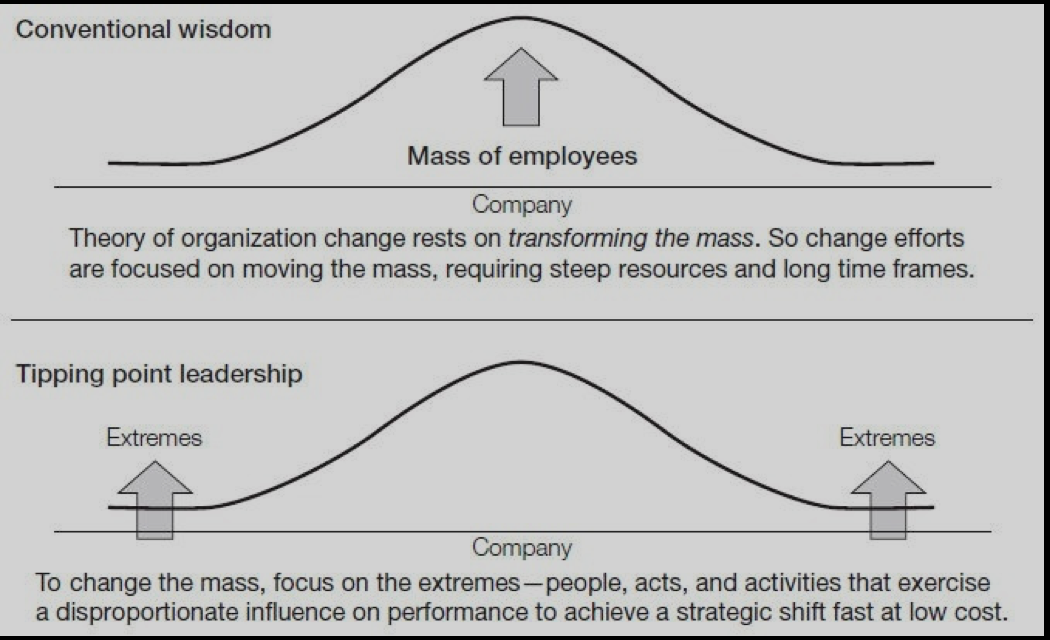
Look Across Time
To form the basis of a blue ocean strategy,
- The strategy must be decisive to your business,
- They must be irreversible,
- They must have a clear trajectory.
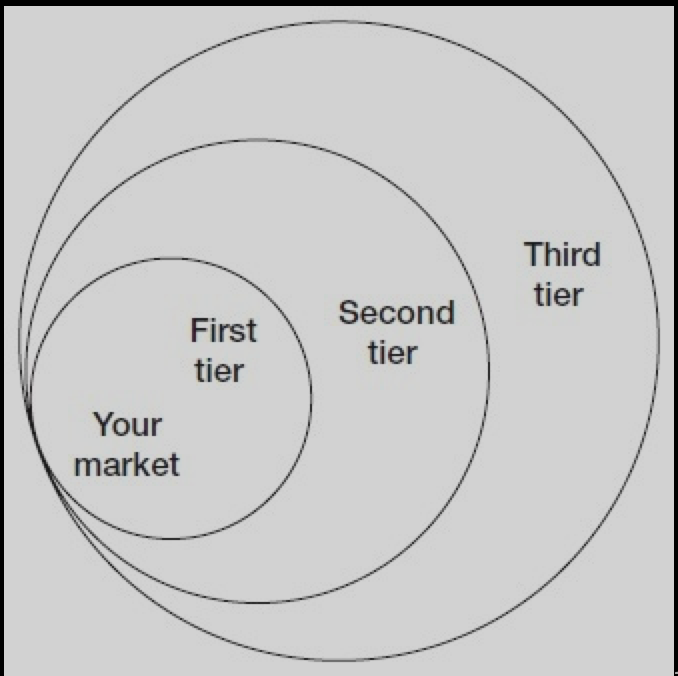
The three tiers of Non-customers
- First tier: “Soon-to-be” noncustomers who are on the edge of your market, waiting to jump ship.
- Second tier: “Refusing” noncustomers who consciously choose against your market.
- Third tier: “Unexplored” noncustomers who are in markets distant from yours.
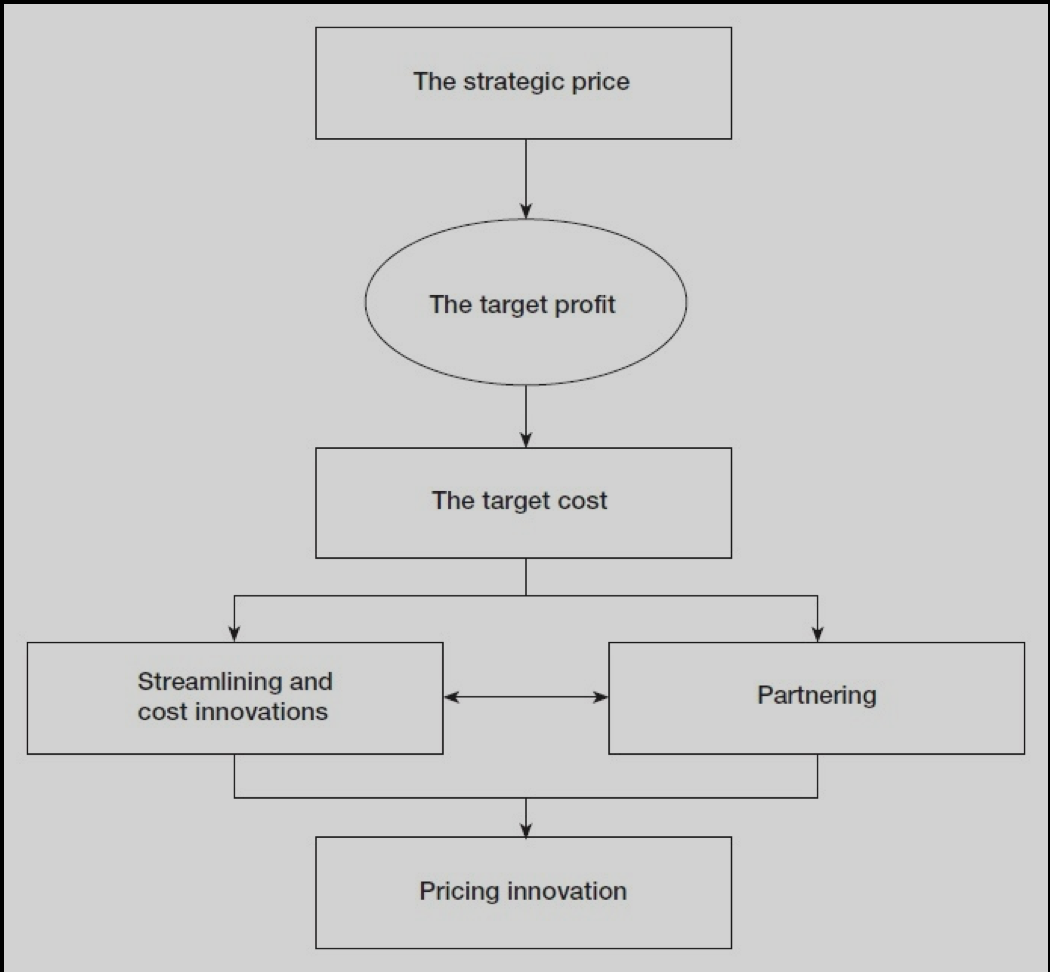
Right Strategic Price
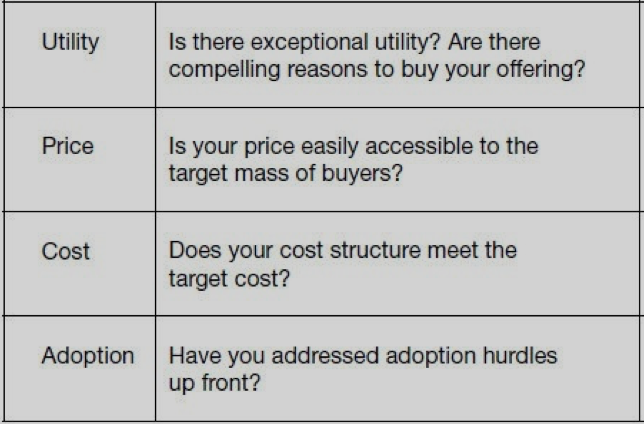
- The key question here is this: Is your offering priced to attract the mass of target buyers so that they have a compelling ability to pay for your offering? If it is not, they cannot buy it. Nor will the offering create irresistible market buzz.
- To secure a strong revenue stream for your offering, you must set the right strategic price.
- It is important to know from the start what price will quickly capture the mass of target buyers.
FREEMIUM
By being both “free” and “premium,” companies are striving to be strategically priced to capture the target mass while earning profit for the premium features those users, having used the product or service, will feel compelled to buy and upgrade to.
Utility,Price And Cost positions
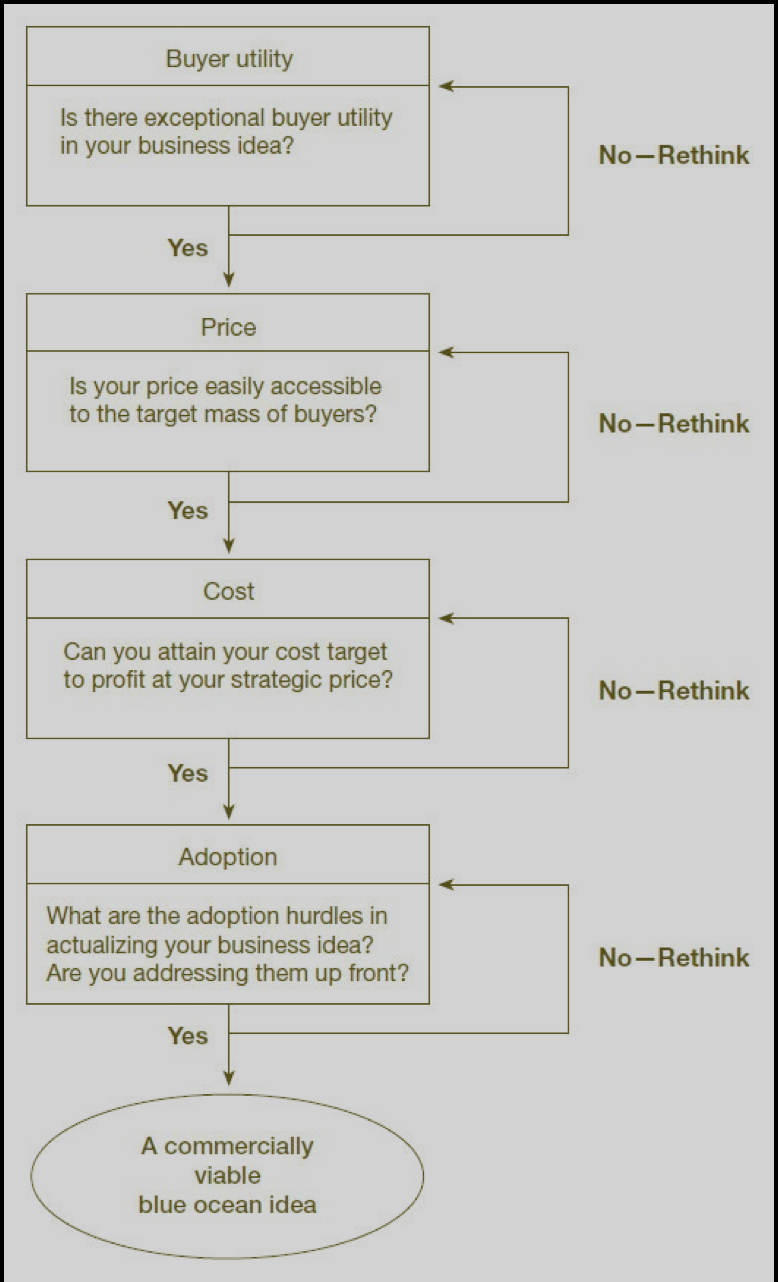
- Value innovation is achieved only when the system of the company’s utility, price, and cost activities is properly aligned.
- Weak utility, price, and cost positions, plus average adoption ability, indicated that a strategy would be a flop.
- Blue ocean strategy is not about being first to market. Rather it’s about being first to get it right by linking innovation to value.
Overcoming Key Organizational Hurdles
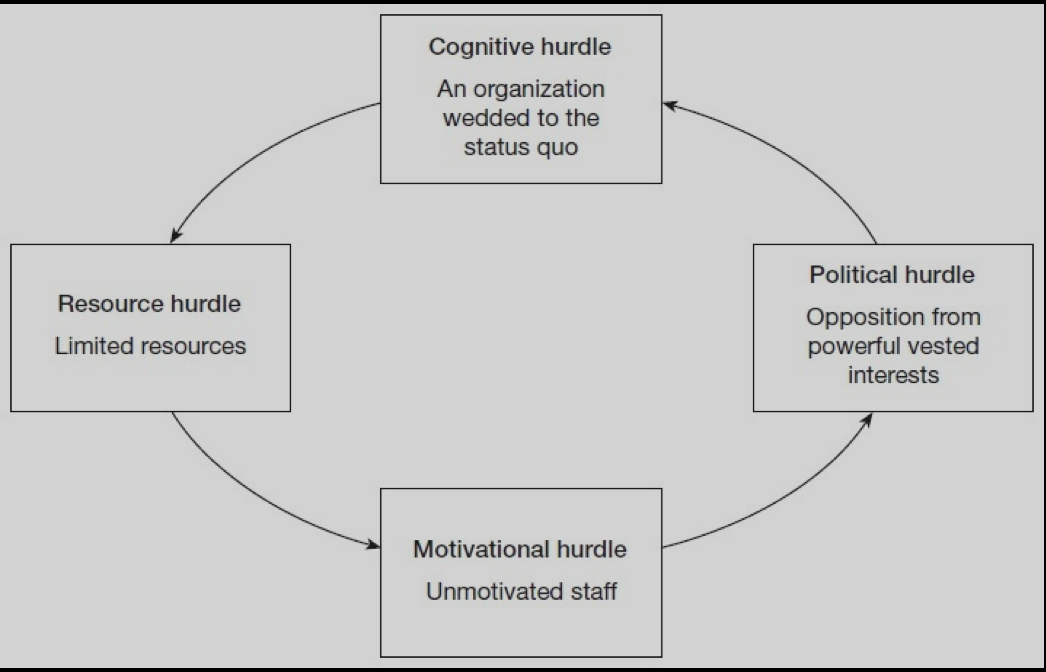
- Cognitive: waking employees up to the need for a strategic shift.
- Limited resources. The greater the shift in strategy, the greater it is assumed are the resources needed to execute it. But resources were being cut, and not raised.
- Motivation. How do you motivate key players to move fast and tenaciously to carry out a break from the status quo?
- Politics.
The Three E Principles of Fair Process
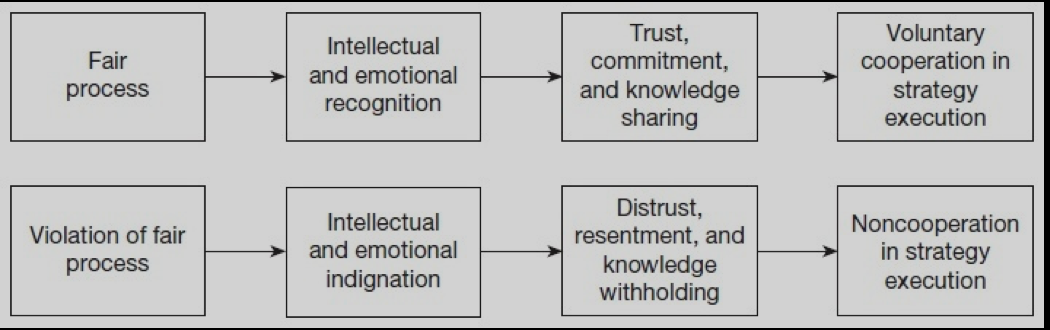
- Engagement: means involving individuals in the strategic decisions that affect them by asking for their input and allowing them to refute the merits of one another’s ideas and assumptions.
- Explanation: means that everyone involved and affected should understand why final strategic decisions are made as they are.
- Clarity of Expectation: requires that after a strategy is set, managers state clearly the new rules of the game.
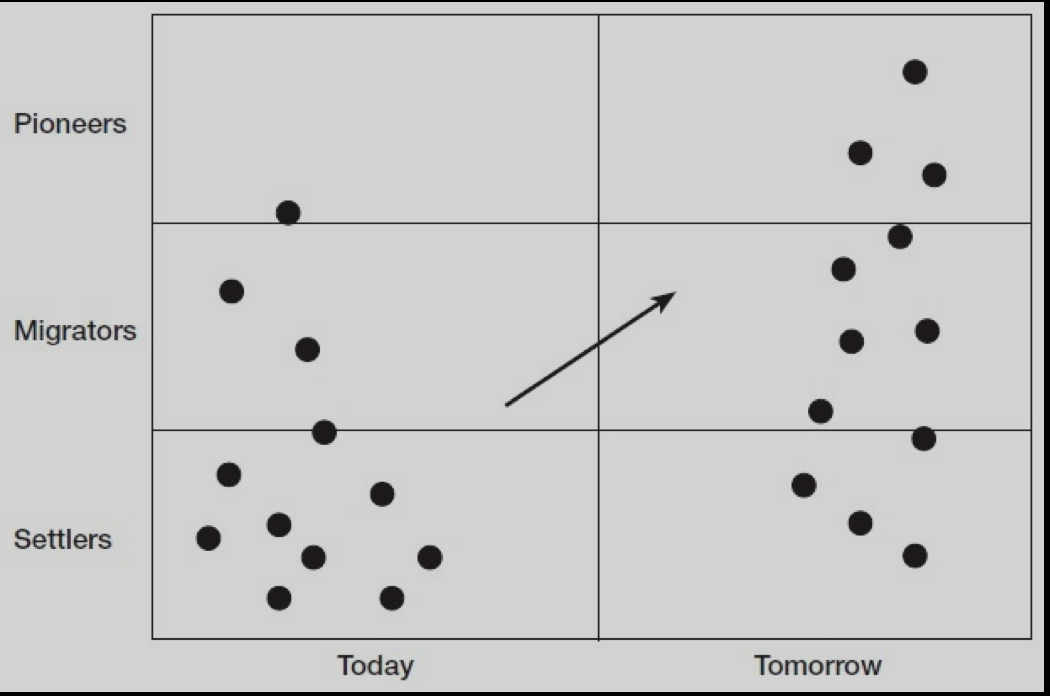
Settlers,Migrators And Pioneers
- Settlers are me-too businesses,
- Migrators represent value improvements, and
- Pioneers are a company’s value innovations.
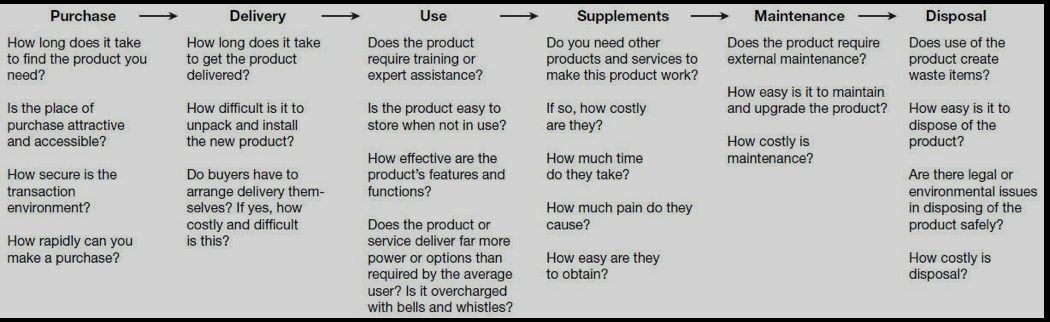
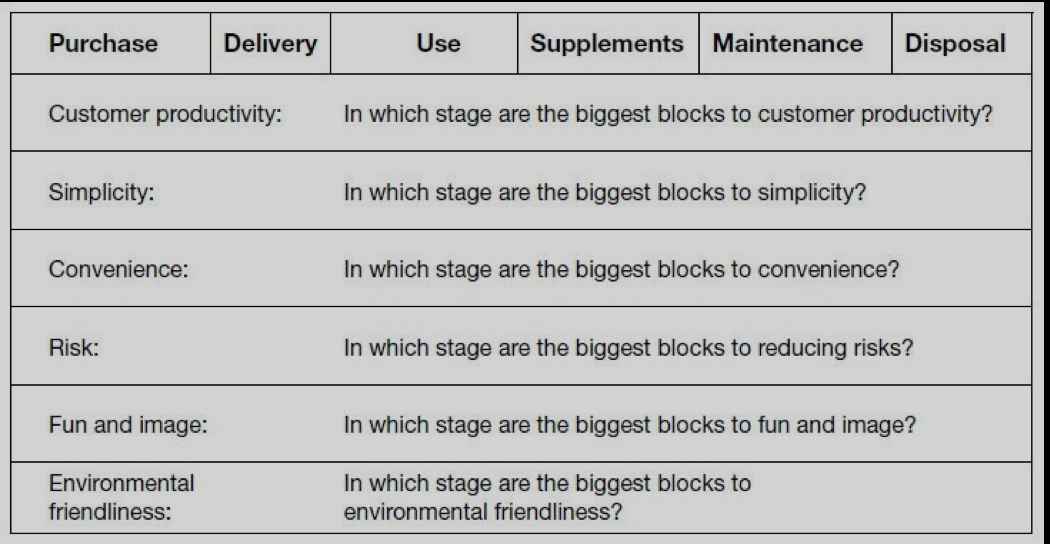
- Ask: How does your product or service offer a leap in productivity, simplicity, ease of use, convenience, fun, and/or environmental friendliness?
- Three strategy propositions—value, profit, and people.

“A focus on the competition often anchors companies in the red ocean, and puts the competitors, rather than the customer, at the core of strategy.”

“Blue ocean strategy is not about finding a better or lower-cost solution to the existing problem of an industry. Instead, it is about redefining the problem itself.”