23 Time Management Techniques of Insanely Busy People
 Curated from:
www.dansilvestre.com
Curated from:
www.dansilvestre.com
Ideas, facts & insights covering these topics:
24 ideas · 598K reads
“Time management is not a peripheral activity or skill. It is the core skill upon which everything else in life depends.”

Work Around Your Energy Levels
Productivity is directly related to your energy level.
Find your most productive hours — the time of your peak energy — and schedule Deep Work for those periods. Do low-value and low-energy tasks (also known as shallow work), such as responding to emails or unimportant meetings, in between those hours.

Plan Your Day the Night Before
Before going to bed, spend 5 minutes writing your to-do list for the next day. These tasks should help you move towards your professional and personal goals.
You’ll be better prepared mentally for the challenges ahead before waking up and there won’t be any room for procrastination in the morning. As a result, you’ll work faster and smoother than ever before.

Start the Day with Critical Work
A golden time management technique: Find your most important task (MIT) for the day and tackle it first.
Your MIT should be the one thing that creates the most impact on your work. Getting it done will give you the momentum and sense of accomplishment early in the day. That’s how big life goals are achieved: small continuous efforts, day after day.
Prioritize Tasks
- Write down all your tasks.
- Identify what’s urgent and what’s important. After each task, mark them with “U” for Urgent and “I” for Important.
- Assess value: look at your “I” tasks and identify the high-value drivers of your work. You want to find which tasks have priority over others and how many people are impacted by your work
- Estimate time to complete each task. Order them from most effort to least effort.

Delegate or Outsource Tasks
- Find to the right person: he should have all the necessary skills and is capable of doing the job
- Provide clear instructions: write down the tasks in a step-by-step manual be as specific as possible
- Define success: be specific about what the expected outcome is and the deadline to have the task completed
- Clarity: have the tasks explained back to you and offer clarification when something is unclear, rewriting the specifications if needed

Automate Repetitive Tasks
Putting some of your daily tasks on autopilot is key to working smarter.
- Create canned responses for emails you keep writing over and over again
- Set reminders in your Calendar so you never forget anything
- Proofread your writing automatically
- Schedule and automate your social media posts in advance
- Automatically fill online forms, saving all your passwords in one place
- Create spreadsheet templates for reports you have to do weekly/monthly.
Set Time Constraints
Set deadlines even when you don’t need to. Schedule less time to complete tasks and force your brain to focus.
Parkinson’s law states: “work expands so as to fill the time available for its completion”. So, if you reduce the time you have to complete a task, you force your brain to focus and complete it.
Eliminate Distractions
- Turn off all notifications on your phone, computer, and tablet
- Leave your phone in odd places that prevent you from immediately finding it
- Work with headphones as people are less likely to approach you.
- If you find interesting articles, save them to read later, such as during the commute
- Turn off your Wi-Fi when your tasks don’t require internet connectivity
- Don’t browse social media at work at all.
- Use “Do Not Disturb” functions on chat systems.
- If you have an office, shut the door.
Make Quick Decisions on Things That Don’t Matter
Invest your focus on big decisions and make quick calls on medium and small decisions.
Small decisions impact you for a day, such as what to wear or where to eat. Medium impact your life for a year, such as deciding to go back to school or rent a different room. In the long term though, very few decisions matter. Those are the big decisions: they are worthy of serious pondering, discussion, investigation, investment, and decision making.
Track Your Time
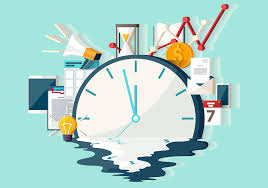
Track your time to have real data on your work and uncover insights on how you can improve your productivity.
After a couple of weeks, you’ll start noticing patterns and knowing where and how your time is leaking. By being aware of how exactly you are using your time, you can devise a plan to attack your leaks and how to get rid of them.
The 2-Minute Rule
- If it can be done in two minutes, just do it. Don’t add it to your to-do list, put it aside for later, or delegate to someone else. Just do it.
- If it takes more than two minutes, start it. Once you start acting on small tasks, you can keep the ball rolling. Simply working on it for two minutes will help you break the first barrier of procrastination.

Say No More Often Than Yes
Say “no” by default to anything that doesn’t contribute to your top 5 career goals.
Your time is a limited resource and you can’t let people set your agenda in life.

Use “Gap Time” Effectively:
- Learn a new skill, either for your professional or personal life
- Read books or articles you saved to for later
- Organize your computer, folders, calendar or work
- Plan your week, tomorrow, or the rest of your day
- Listen to a podcast
- Learn a language
- Take a walk and think and let your mind wander
- Take a productive pause to clear your mind.
80/20 Your Time
The 80 20 rule states that “80% of the output or results will come from 20% of the input or action”. In other words, the little things are the ones that account for the majority of the results.
Use the 80/20 rule in your life and work to prioritize the input that brings the majority of the output.

Automate Decisions
- Transfer money to your savings account every time you receive a paycheck
- Choose all your outfits for your week on Sunday and hang them in the closet in order
- Subscribe to a weekly fresh delivery of organic vegetables and fruits to your home
- Standardize the typical daily meals you like the most, saving time in cooking and grocery shopping
- Prepare your sports bag every night and put it in your car. If you prefer running the morning, leave your running shoes near the bed
- Automate all electronic gadgets to go into sleep mode at a certain hour
Single Task
Switching between tasks can have damaging costs to our work and productivity.
Develop the habit of single-tasking by forcing your brain to concentrate on one task and one task only. Put your phone away, close all the browser windows and apps that you don’t need. Immerse yourself in this task. Only move to the next one when you’re done.
Break Down Big Tasks
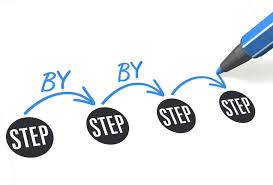
Break down big tasks into smaller ones to avoid procrastinating and help you stay on track to achieve your final goal.
Never put a huge project down as just one to-do on your list. Instead, put bite-sized to-dos that you can do one at a time. Take it step by step.

Work From the Calendar
Schedule tasks, working from your calendar instead of the to-do list. When an event is consistently scheduled on your calendar, it’s much more likely to transform into an unconscious habit
Using your calendar forces you to rethink your work from tasks to time units. That small change increases the likelihood of getting things done.

Take Fewer Meetings
- Do not schedule more time than needed. Most of the times 20 minutes is the sweet spot.
- Keep the number of participants small.
- Send everyone an agenda and main points the day before
- Keep conversation on-track by reminding the participants of the topic.
- Group your meetings back-to-back to have a clear start and end point for each one
Let Go Of Perfectionism
Aiming for perfection is a surefire way to delay or never complete a project. Choose to chase “good enough” instead.
It’s easy to be caught up in an endless cycle of trying to do everything perfectly. But being a perfectionism can delay your work and make you miss important deadlines
Have a To-Don’t List
Create a To-Don’t list with all the habits you want to remove from your life. For example:
- Do not email first thing in the morning or last thing at night
- No morning meetings
- Don’t say yes unless you’re 100% certain you can deliver
- Don’t drink coffee in the afternoon
- Do not agree to meetings or calls with no clear agenda or end time

Batch Similar Tasks
The main idea behind this time management technique is to collect up a group of similar activities and do them all in one swoop.
You can work efficiently on multiple tasks without losing your flow if the activities require similar mindsets. Batching forces your brain to be focused on one type of task at a time.

Take Time Off to Recharge
Schedule breaks throughout your day to help you recharge and take regular vacations throughout the year. Rest is the best medicine for sustainable long-term productivity.