
A Brief Guide on How to Sleep Better Every Night
 Curated from:
jamesclear.com
Curated from:
jamesclear.com
Ideas, facts & insights covering these topics:
12 ideas · 392K reads

The Science of Sleep
The average adult spends 36 % (or about one-third) of his or her life asleep.
Purpose of sleep:
- Restoration
- Memory consolidation
- Metabolic health.
Restoration
The first purpose of sleep is restoration.
Every day, your brain accumulates metabolic waste as it goes about its normal neural activities. Sleeping restores the brains healthy condition by removing these waste products. Accumulation of these waste products has been linked to many brain-related disorders.

Memory Consolidation
Sleep is crucial for memory consolidation, which is responsible for your long term memories.
Insufficient or fragmented sleep can hamper your ability to remember facts and feelings/emotions.
Metabolical Health
When we sleep 5.5 hours per night instead of 8.5 hours per night (recommended is 8 hours), we tend to burn more energy using carbs and protein, instead of fat.
This can result in fat gain and muscle loss. Also, insufficient sleep or abnormal sleep cycles can increase the risk of diabetes and heart disease.

Cumulative Stress
Cumulative stress takes place when the inputs in our body like nutrition, sleep and other forms of recovery are not able to fulfill the drainers, like exercise, stress, and other forms of things that take away our energy.
Keep your Bucket of Energy Full
- Refill your bucket on a regular basis. That means making time for sleep and recovery.
- Let the draining tasks in your life accumulate and drain your bucket. Once you hit empty, your body will force you to rest through injury and illness.
The Sleep-Wake Cycle
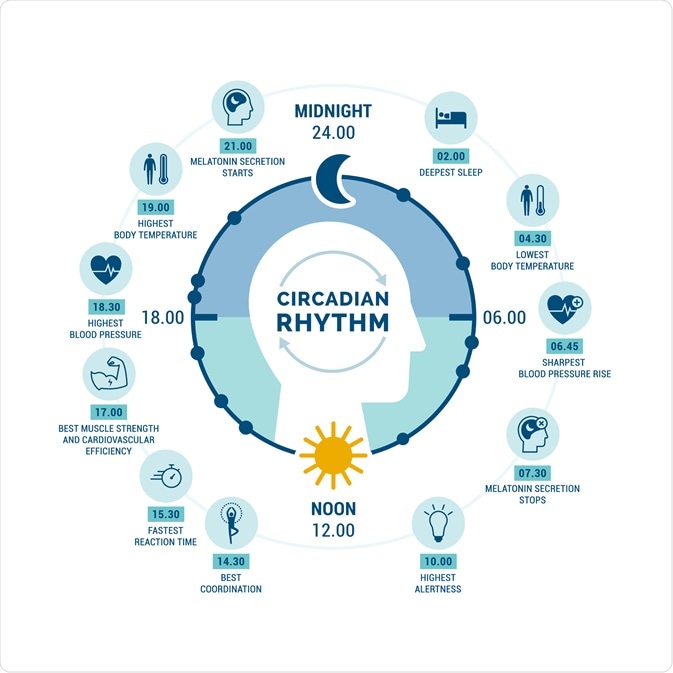
The quality of your sleep is determined by a process called the sleep-wake cycle. This cycle is dictated by your circadian rhythm.
There are two important parts of the sleep-wake cycle:
- Slow-wave sleep (also known as deep sleep)
- REM sleep (REM stands for Rapid Eye Movement).
How to Sleep Better
- Develop a “power down” ritual before bed, limiting the use of technology and bright lights.
- Use relaxation techniques like yoga or meditation.
- Get some sun exposure every day.
- Avoid caffeine.
- Stop smoking or chewing tobacco.
- Use the bedroom for sleep-related activities only, keeping it uncluttered and inducive to sleep.
- Get some exercise in the day.
- Keep room temperature ideal for sleep.
- Avoid excessive alcohol.
- Avoid noisy surroundings and conditions.

The Circadian Rhythm
It is impacted by three main factors:
- Light: probably the most significant pace setter of the circadian rhythm. Staring into a bright light for 30 minutes or so can often reset your circadian rhythm regardless of what time of day it is.
- The time of day, your daily schedule, and the order in which you perform tasks can all impact your sleep-wake cycle.
- Melatonin: this is the hormone that causes drowsiness and controls body temperature. It increases after dark and decreases before dawn.
How to Fall Asleep Fast
- Develop a “power down” ritual before bed: shut off all electronics an hour or two before sleep and resume all work early in the day, to calm your mind.
- Use relaxation techniques: proven methods include daily journaling, deep breathing exercises, meditation, exercise, and keeping a gratitude journal.

Daily Habits for Better Sleep
- Get outside. Aim for at least 30 minutes of sun exposure each day.
- Turn out the lights. When it gets dark outside, dim the lights in your house and reduce blue or full-spectrum light in your environment.
- Avoid caffeine and stop smoking or chewing tobacco.
- Use the bedroom for sleep and sex only.
Also, consider these sleep aids: exercise (it will make it easier for your brain and body to power down at night), temperature (the ideal range is usually between 65 to 70 degrees Fahrenheit/18 to 21 degrees Celsius) and sound (a quiet space is key for good sleep).
The Best Bedtime Will Differ For Everyone
When choosing your bedtime, try not to fight your physiology. The best bedtime will differ a little bit for everyone, but it's crucial that you pay close attention to your internal clock and what your body is telling you.
As long as you're getting the recommended 8 hours of sleep, just focus on finding the time that works best for you.
Similar ideas

7 ideas
Ikigai: A Japanese concept to improve work and life
www.bbc.com

10 ideas
These 10 Scientific Ways to Learn Anything Faster Could Change Everything You Know About Dramatically Improving Your Memory
www.inc.com

14 ideas
Here are 11 ways you can increase dopamine levels in the brain without medication
ideapod.com