
10 schools of philosophy and why you should know them
 Curated from:
bigthink.com
Curated from:
bigthink.com
Ideas, facts & insights covering these topics:
10 ideas · 147K reads

Nihilism
Nihilism means "nothing." It is the lack of belief in meaning or substance in an area of philosophy.
- Moral nihilism argues that moral facts cannot exist.
- Metaphysical nihilism argues that we cannot have spiritual facts.
- Existential nihilism is the idea that life cannot have meaning and nothing has value.
Nietzsche was not a nihilist but wrote about the dangers posed by this philosophy.

Existentialism
Existentialism originates from Soren Kierkegaard and Nietzche. It focuses on the problems produced by existential nihilism. For instance:
- What is the point of living if life has no inherent purpose?
- How do we face the knowledge of our inevitable demise?
Existentialism emphasizes individual existence, freedom and choice.
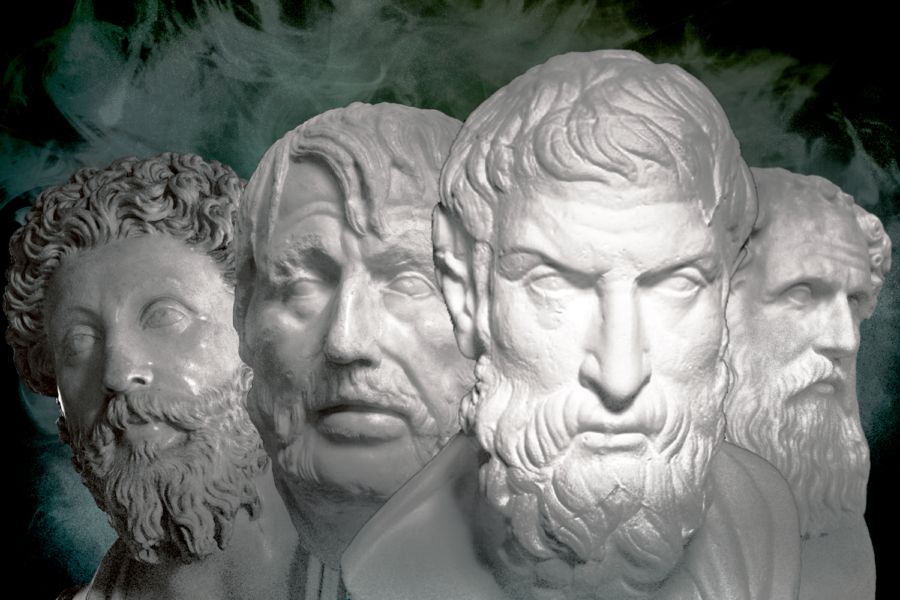
Stoicism
Stoicism was popular in ancient Greece and Rome and is practiced by many in high-stress environments.
Stoicism focuses on how to live in a world where things don't go as planned. The idea is to accept all the things beyond your control and to focus on what you can control.

Hedonism
Hedonism is the idea that pleasure and happiness are the keys to a good life. Modern philosophers would say that pleasure is a kind of happiness, but not the only happiness.
Epicurus tied hedonism to a virtue ethics system based around moderation and self-discipline.

Marxism
Marxism is based on the collected ideas of Karl Marx, the German philosopher. He critiqued capitalism. Main ideas:
- The capitalist mode of production alienates us from the results of our labor;
- The tendency of capitalism to overproduce and crash as a consequence;
- The labor theory of value.
Famous Marxists include Lenin, Stalin, Mao, and Slavoj Zizek.

Logical Positivism
It is focused on the idea of verifications. It is trying to base all knowledge on either empirical data or logical tautologies.
The underlying principle of verificationism cannot be shown to be true, making it unsolvable.

Taoism
Taoism is based around the Tao Te Ching, written by the ancient Chinese philosopher Lao-Tzu. It is based around ideas of:
- humility
- the 'Way'
- a focus on the individual
- simplicity
- naturalness
Taoist thought later fused with Buddhism and formed Zen.

Rationalism
Rationalism is the idea that knowledge must come from reason and thought, rather than empirical evidence. Socrates, Rene Descartes, and Spinoza argued for rationalism.
Today, most thinkers combine rationalist notions with empirical data.

Relativism
Relativism is the idea that views are relative to the perspective. This idea can be applied to morality or truth, where some argue that there are no moral facts or absolute truths.
Cultural relativism is the idea that the morality of two different cultures cannot be compared.

Buddhism
Buddhism is based on the teachings of Gautama Buddha. Although Buddhism has a diverse range of thought, it is bound together by the idea that suffering has a cause.
Buddhism believe suffering can be overcome by: meditation, following the eightfold path and contemplation of sutras.


