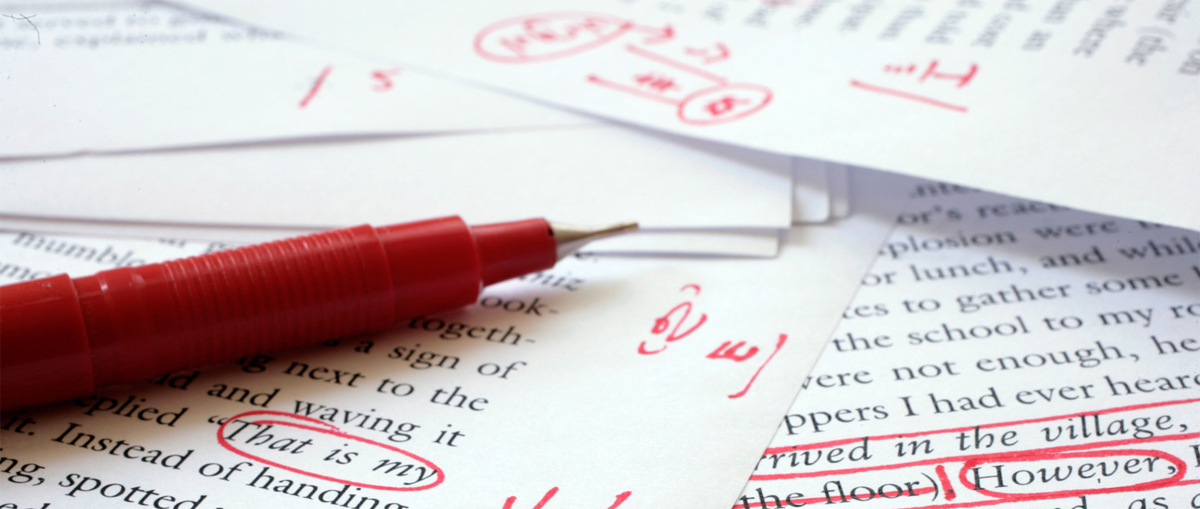
Rewriting is the essence of writing
Professional writers rewrite their sentences over and over and then rewrite what they have rewritten.

"But the secret of good writing is to strip every sentence to its cleanest components.”
A reader's attention span
- A reader's attention span is about 30 seconds. And this is usually a person assailed by many forces competing for attention.
- In the past, those forces were relatively few: newspapers, magazines, radio, spouse, children, pets.
- Today they also include multiple electronic devices for receiving entertainment and information, as well as a fitness program, a pool, and that most powerful competitor, sleep.

“Clear thinking becomes clear writing; one can’t exist without the other.”
Writing well: getting to the point
Writers must constantly ask: "What am I trying to say?" Most of the time, they don’t know. Then they must look at what they have written and ask: "Have I said it?"
If something isn’t important enough for your writing, then remove it. In fact, most first drafts can be cut in half and still get the point across without losing anything important.
Eliminate words with no purpose
Writing improves in direct ratio to the number of things we can keep out of it that shouldn’t be there.
Consider all the prepositions that are draped onto verbs that don’t need any help. Examine every word you put on paper. You’ll find a surprising number that doesn’t serve any purpose.

“Writing is hard work. A clear sentence is no accident. Very few sentences come out right the first time, or even the third time. Remember this in moments of despair. If you find that writing is hard, it’s because it is hard.”
The principle of simplicity
There are many methods for writing nonfiction, but the most effective method is to find what works for you. Whatever helps you is the “right” way.
However, there are key principles to good writing, and one of them is simplicity. Writers often use complicated or additional words to sound impressive, but good writing should be simple with clean language.
Don’t inflate what needs no inflating
Clutter doesn’t make your writing stylish; in fact, trying too hard makes your writing seem fake.
Just write naturally and clearly; don’t try too hard with fancy words or complicated sentences that are just confusing.

“You learn to write by writing. It’s a truism, but what makes it a truism is that it’s true. The only way to learn to write is to force yourself to produce a certain number of words on a regular basis.”
The most important sentence in any writing: the first one
- If it doesn’t induce the reader to proceed to the second sentence, your work is dead. Of such a progression of sentences, each tugging the reader forward until he is hooked, a writer constructs that fateful unit, the “lead.”
- Do not count on the reader to stick around. Readers want to know very soon what’s in it for them.

Writing well: the perfect ending
- Give as much thought to choosing your last sentence as you did to your first.
- Bring the story full circle: strike an echo of a note that was sounded at the beginning.
- The perfect ending should take your readers slightly by surprise and yet seem exactly right.
- Don’t sell past the close. When you’re ready to stop, stop.
Write for yourself
You can’t predict what people will want to read. So don't worry about pleasing others.
Don’t try to visualize your audience; every reader is a different person. Don’t try to guess what sort of thing editors want to publish or what you think the country is in a mood to read. Editors and readers don’t know what they want to read until they read it. Besides, they’re always looking for something new.
Write in the first person
- Writers at their most natural when they write in the first person.
- Better to have an opinion and say 'I', 'we', 'us', 'me' than to take everything into a passive voice.
- If you aren’t allowed to use “I,” at least think “I” while you write, or write the first draft in the first person and then take the “I”s out.

Writing is learned by imitation
"The race in writing is not to the swift but to the original."
Make a habit of reading what is being written today and what was written by earlier masters.
Writing well: choosing the right words
- Avoid at all costs the cliches of the thousands of writers who have gone before you.
- When you’re choosing words and stringing them together, be aware of how they sound.
- Use words you enjoy and that are vivid.
- Know the subtle differences between synonyms and which one best expresses what you want to say.
- Use the words that have precise meanings rather than those that are vague.