Nudge: Improving Decisions About Health, Wealth, and Happiness
Curated from: books.google.com
Ideas, facts & insights covering these topics:
9 ideas · 3.1K reads
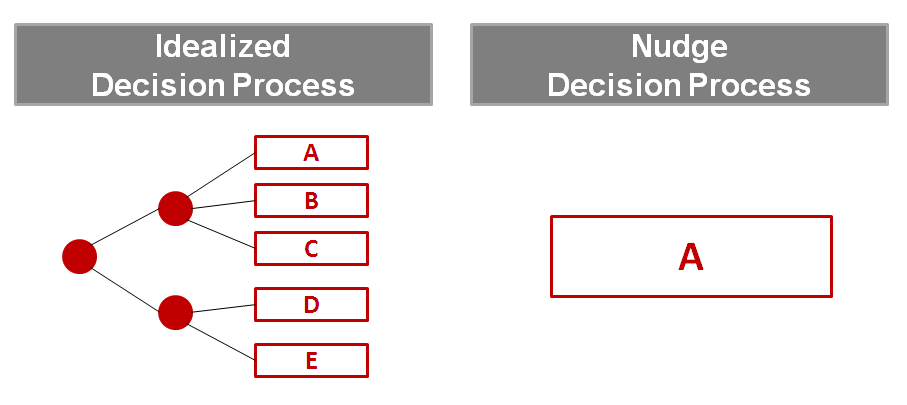
Who is a Choice Architect and why do we need nudges?
A choice architect is one who indirectly influences the choices other people make. They are entitled to the responsibility for organizing the context in which people make decisions.
If you design the ballot the voters use it to choose candidates or design the form that employees fill out to enroll in the company health care plan you are a choice architect.
People will need nudges for rare and difficult decisions, for which they do not get prompt feedback and when they have trouble translating aspects of the situation into terms that they can easily understand.

The Fly in the Urinal
The authorities at Schipol Airport in Amsterdam have etched the image of a black housefly into each urinal in the men's room. Men usually don't pay much attention to where they aim but if they see a target, their attention and accuracy increases.
The natural urge is to aim (and drown the fly) resulted in 80% less splash. Cleaner restrooms lead to less cleaning leading to less harmful chemicals being used and also it doesn't hurt to make people laugh.

Defaults are ubiquitous and powerful
For a given choice there is a default option, an option that will obtain if the chooser does nothing, then we can expect a large number of people to end up with that option.
Automatic renewal for magazine subscriptions is a classic example.
If the choice architect forces to choose then keep 2 points in mind:
- Humans will often consider the required choice to be a nuisance or worse.
- It should often be considered for simple yes or no decisions than for more complex decisions.
Two Opportunities
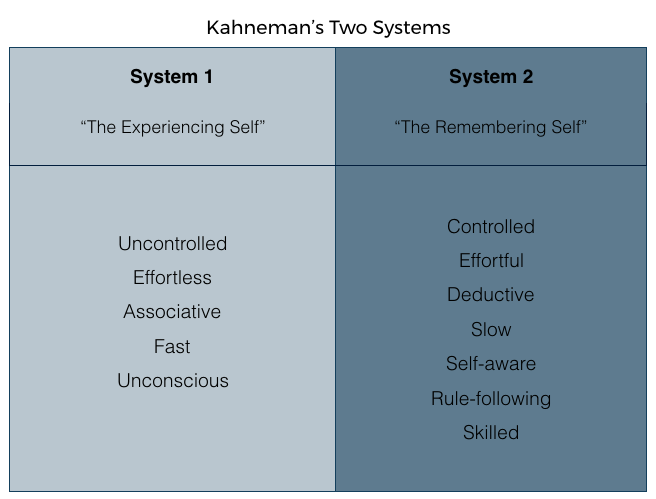
Insights from the architecture of choice reveal two opportunities for the innovator based on basic psychology and the fact that people have two distinctive thinking styles that they flip between;
- Reflective thinking (aka “Systematic”, “Central”, “System 2” thought) that is temporary, slow, considered, effortful and deliberate
- Automatic thinking (aka “Heuristic”, Peripheral, System 1″ thought) which is our default style – quick, instinctive, impulsive and, critically, highly error-prone)
How to Change the World
- Either play on the fallacies and biases that pattern our automatic (lazy) thinking (see list further down),
- Or jolt people into reflective thinking by providing them with a new way of thinking about something
A nudge… is any aspect of the choice architecture that alters people’s behavior in a predictable way without forbidding any options or significantly changing their economic incentives.
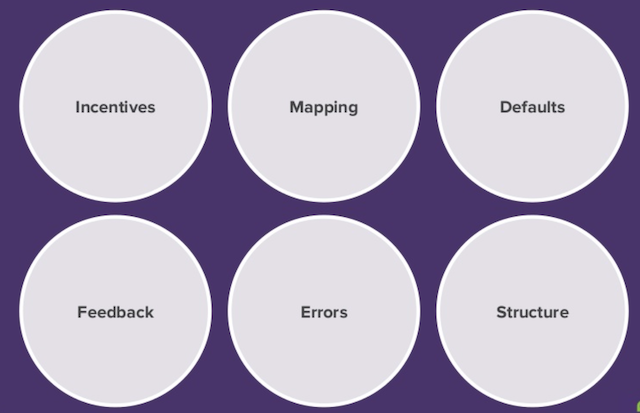
6 Principles of good choice architecture
iNcentives - The right incentives for the right people enable good decision-making processes.
Understand Mappings is how people can better relate to the consequences of different decision pathways
Defaults - People often leave the default decision on if they are too lazy to make a decision.
Give Feedback - A good way to help humans improve their performance is to provide feedback.
Expect Error - To err is human and designs should be made such that people are forewarned before a more disastrous outcome happens.
Structure complex choices - having too many choices can cause choice overload, simplify.
Biases and fallacies in how we choose
- Loss Aversion: We prefer not to lose rather than gain
- Myopia: We make choices based on short term gain, often at long-term costs
- Conformity: We tend to make choices to conform with the behaviour and expectations of others
- Anchoring Bias: Choosing by relying too heavily on the first piece of information offered.
- Availability Bias: Choosing by overestimating the likelihood something will happen because you can imagine it (e.g. being in a plane crash)
- Representativity Bias: Choosing by overestimating the likelihood something will happen because it fits (is representative of) your expectations
Understand Mapping
A good system of choice architecture helps people to improve their ability to map and select options that will make them better off.
One way to do this is to make the information about various options more comprehensible, by transforming numerical information into units that translate more readily into actual use.
If I am buying apples to make into apple cider, it helps to know the rule of thumb that it takes three apples to make one glass of cider.