How Prince Philip Modernized—and Fought to Preserve—the Monarchy
 Curated from:
www.smithsonianmag.com
Curated from:
www.smithsonianmag.com
Ideas, facts & insights covering these topics:
8 ideas · 2K reads

Broadcasting The Coronation Of The Queen
- A commission chaired by Prince Philip proposed broadcasting the 1953 investiture ceremony that formally named Elizabeth II as queen on live television.
- Even if Prime Minister Winston Churchill expressed clear disapproval, the queen came around to the idea, allowing the broadcast of all but one segment of the coronation.
- More than 20 million people tuned in to the televised ceremony.
Television As A Way Of Connecting With The People
The years after the coronation of Queen Elisabeth II the royals continued to embrace television as a way of connecting with the British people:
- In 1957, the queen delivered her annual Christmas address during a live broadcast.
- Four years later, in 1961, Philip became the first family member to sit for a television interview.
- Toward the end of the decade, the Windsors even invited cameras into their home, offering the BBC the opportunity to film a behind-the-scenes documentary.
Much of this push for transparency can be traced back to Prince Philip, whose unconventional upbringing inspired him to modernize the monarchy.
Prince Philip's Start In Life
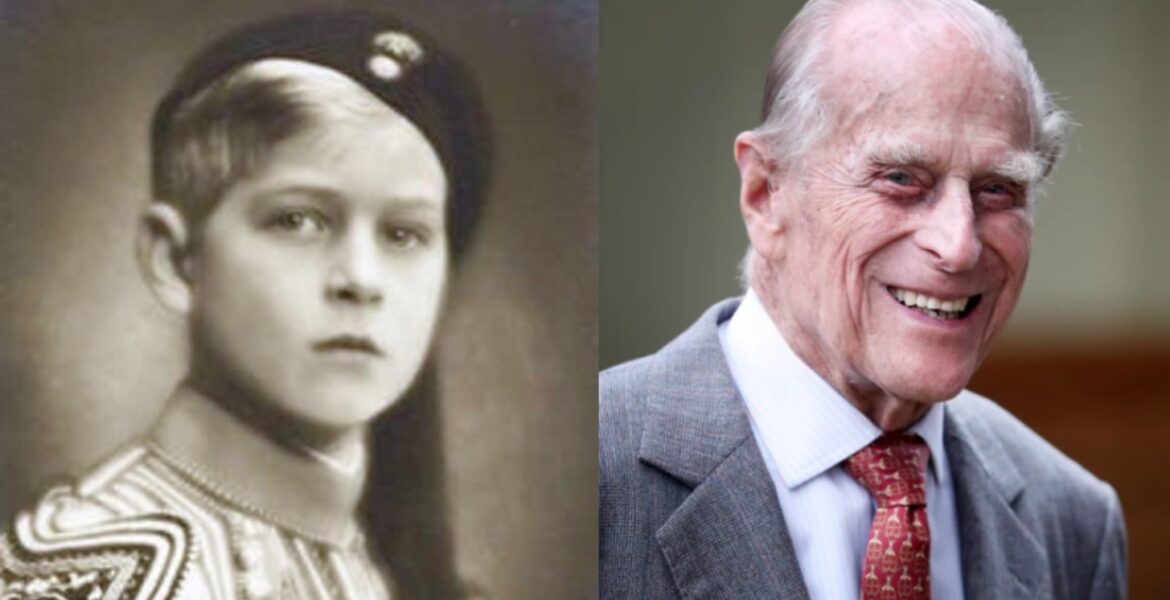
Born on the Greek island of Corfu in June 1921, Philip was the great-great-grandson of Queen Victoria and nephew of Constantine I of Greece, whose 1922 abdication forced the young infant and his family to flee their home country.
Philip spent stretches of time in France, England and Germany, and was notably scarred by tragedies, including the institutionalization of his mother and death of his beloved older sister in a plane crash.

Meeting The Future Queen
- Philip and Elizabeth first met in 1934, when he was 13 and she was 8.
- Five years later, the pair crossed paths again: As Elizabeth’s cousin recalled in her autobiography, the princess “was truly in love from the very beginning.”
- The couple wed in 1947, embarking on a 74-year partnership that would cement Philip’s status as the United Kingdom’s longest-serving royal consort.

'Being married to the queen, it seemed to me, my first duty was to serve her in the best way I could.''

“He is someone who doesn’t take easily to compliments but he has, quite simply, been my strength and stay all these years, and I … owe him a debt greater than he would ever claim or we shall ever know.”
"By the ’80s, he [Prince Philip] had written nine books. He was the first person in the royal family to use television. He did a television documentary. He persuaded the Queen in 1957 to televise her annual Christmas message. And he even taught her how to use a teleprompter. He was the first member of the royal family to use a computer … He picked up the phone, but also wrote all his own emails. He wrote his speeches. He was a man of searching intellect, great curiosity."
The Demystification Of The Royals
- The BBC began filming its “Royal Family” documentary in June 1968. Philip oversaw the process and sought to ensure the royals were presented in a humanizing light.
- Though the documentary has strong viewership, Buckingham Palace decided to stop its broadcast without the queen’s permission, because it revealed the royals to be a pretty normal British upper-class family - the monarchy began to lose the aura of grandeur that distance conveyed.
- Over the following decades, as the royal couple’s children navigated much-publicized divorces, this sense of demystification was exacerbated even more.
- Prince Philip also faced criticism and continued to make headlines for his offensive comments, many of which played on racial stereotypes, and brought much unwanted attention to the royal family.