
How Communication Evolved From Pictures to Letters
Curated from: www.thoughtco.com
Ideas, facts & insights covering these topics:
6 ideas · 1.3K reads
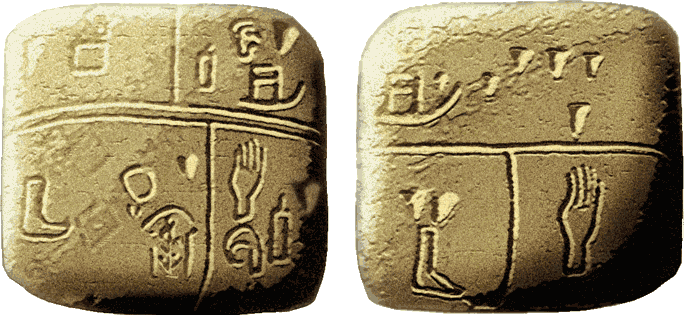
Written communication during the BCE Years
The Kish tablet is dated to 3500 B.C. and is considered by some experts to be the oldest form of known handwriting. It features proto-cuneiform signs - symbols that resemble a physical object. The Egyptian hieroglyphs are similar to this form of writing and date back to 3200 B.C.
Written language seems to have come about around 1200 B.C. in China and around 600 B.C. in the Americas.
The phonetic system
- The phonetic system does not use pictorial signs but symbols to refer to spoken sounds. Modern alphabets that many people in the world use today represent a phonetic form of communication.
- Remnants of these systems appeared either around 19th century B.C. from the early Canaanite population, or the 15th century B.C. from a Semitic community that lived in central Egypt.
- Over time, various forms of the Phoenician system of written communication began to spread. By the 8th century B.C., the Phoenician system reached Greece, where it changed to the Greek oral language.
Long-distance communication
- The Greeks used messenger pigeons to deliver the results of the first Olympiad in the year 776 B.C. They also established a library in 530 B.C.
- Near the end of the B.C. period, systems of long-distance communication became more commonplace. In Egypt and China, messenger relay stations were built. They used human messengers on foot or horseback.
- In the year 14, the Romans established the first postal service. Mail delivery systems were already established in India and China.
The invention of paper and moveable type
- In 105 China, an official Cai Lung suggested using "the bark of trees, remnants of hemp, rags of cloth, and fishing nets" for writing on instead of heavier bamboo or costlier silk material.
- The Chinese followed that up with the invention of the first clay moveable type for printing paper books between 1041 and 1048.
- Between 1436 and 1450, Gutenberg's printing press was developed. It introduced key innovations such as oil-based ink, mechanical movable type, and adjustable moulds.
The telegraph and Morse code
In 1835, inventors Joseph Henry and Edward Davey independently demonstrated electromagnetic relay, where a weak electrical signal can be amplified and transmitted across long distances. Cooke and Wheatstone invented the telegraph shortly after.
A few years later, Samuel Morse developed a version that sent signals from Washington D.C. to Baltimore. Afterwards, he developed a system of signal-induced indentations that correlated to numbers, special characters, and letters of the alphabet, known as the Morse code.
The telephone and answering machines
The next idea to explore was finding a way to transmit sound to far distances. Alexander Graham Bell laid out the underlying technology for electromagnetic telephones and was granted a patent in 1876 for his improvements in telegraphy.
This introduced a new problem: what if you were not available if someone tried to call you? At the turn of the 20th century, Danish inventor Valdemar Poulsen invented the telegraphone, a device for recording and playing back the magnetic fields produced by sound.