Eduo
Log in Sign up
Factfulness
📰 Article

Factfulness

“One of the most important books I’ve ever read—an indispensable guide to thinking clearly about the world.” – Bill Gates “Hans Rosling tells thestory of ‘the secret silent miracle of human progress’ as only he can. But Factfulness does much more than that. It also explains why progress is so often secret and silent and teaches readershow to see it clearly.” —Melinda Gates Factfulness: The stress-reducing habit of only carrying opinions for which you have strong supporting facts. When asked simple questions about global trends—what percentage of the world’s population live in poverty; why the world’s population is increasing; how many girls finish school—we systematically get the answers wrong. So wrong that a chimpanzee choosing answers at random will consistently outguess teachers, journalists, Nobel laureates, and investment bankers. In Factfulness, Professor of International Health and global TED phenomenon Hans Rosling, together with his two long-time collaborators, Anna and Ola, offers a radical new explanation of why this happens. They reveal the ten instincts that distort our perspective—from our tendency to divide the world into two camps (usually some version of us and them) to the way we consume media (where fear rules) to how we perceive progress (believing that most things are getting worse). Our problem is that we don’t know what we don’t know, and even our guesses are informed by unconscious and predictable biases. It turns out that the world, for all its imperfections, is in a much better state than we might think. That doesn’t mean there aren’t real concerns. But when we worry about everything all the time instead of embracing a worldview based on facts, we can lose our ability to focus on the things that threaten us most. Inspiring and revelatory, filled with lively anecdotes and moving stories, Factfulness is an urgent and essential book that will change the way you see the world and empower you to respond to the crises and opportunities of the future. --- “This book is my last battle in my life-long mission to fight devastating ignorance...Previously I armed myself with huge data sets, eye-opening software, an energetic learning style and a Swedish bayonet for sword-swallowing. It wasn’t enough. But I hope this book will be.” Hans Rosling, February 2017.

Psychology Personal Development Books
20 ideas 103.6K reads
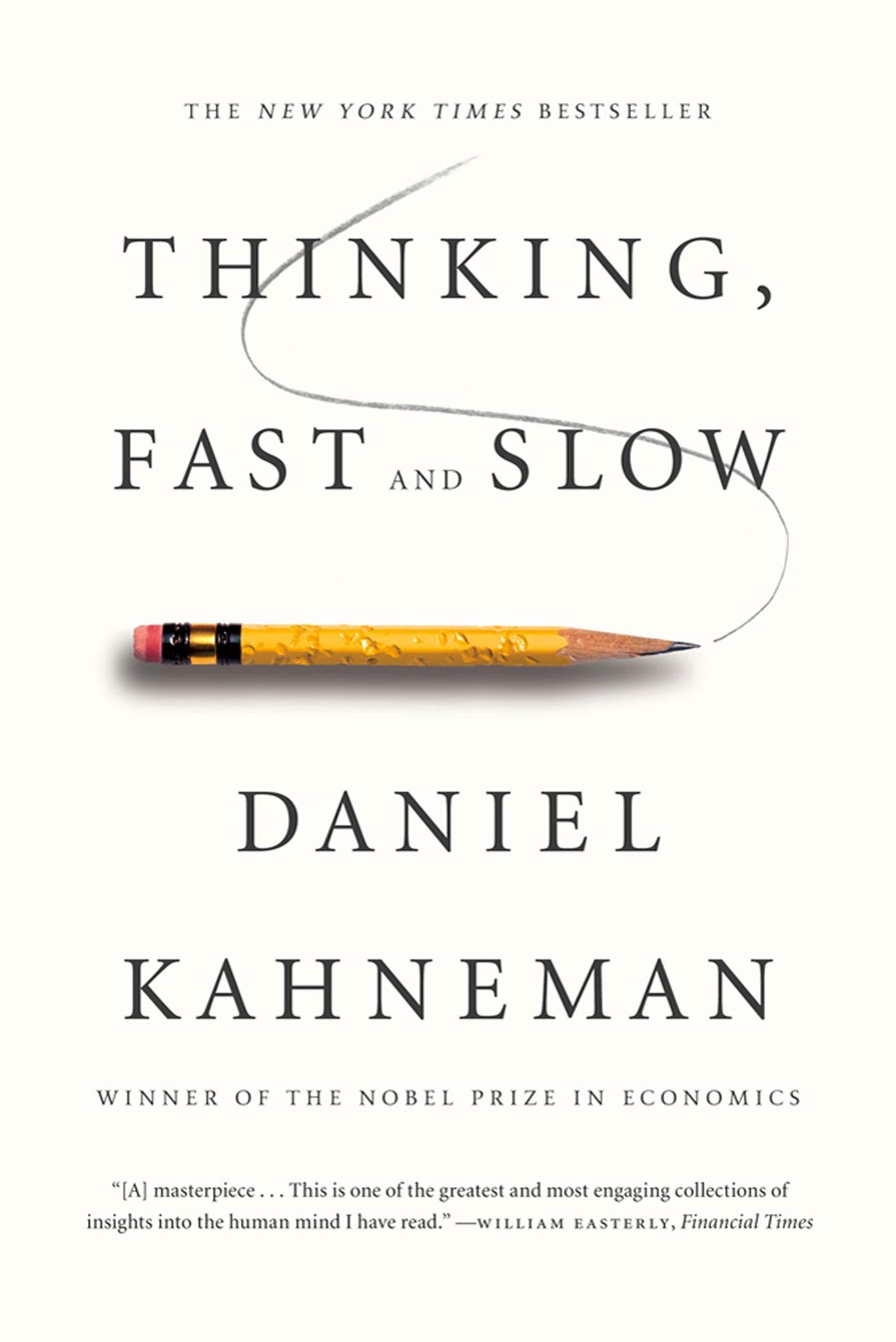
Thinking, Fast and Slow
📰 Article

Thinking, Fast and Slow

Major New York Times bestseller Winner of the National Academy of Sciences Best Book Award in 2012 Selected by the New York Times Book Review as one of the ten best books of 2011 A Globe and Mail Best Books of the Year 2011 Title One of The Economist's 2011 Books of the Year One of The Wall Street Journal's Best Nonfiction Books of the Year 2011 2013 Presidential Medal of Freedom Recipient Kahneman's work with Amos Tversky is the subject of Michael Lewis's The Undoing Project: A Friendship That Changed Our Minds In the international bestseller, Thinking, Fast and Slow, Daniel Kahneman, the renowned psychologist and winner of the Nobel Prize in Economics, takes us on a groundbreaking tour of the mind and explains the two systems that drive the way we think. System 1 is fast, intuitive, and emotional; System 2 is slower, more deliberative, and more logical. The impact of overconfidence on corporate strategies, the difficulties of predicting what will make us happy in the future, the profound effect of cognitive biases on everything from playing the stock market to planning our next vacation—each of these can be understood only by knowing how the two systems shape our judgments and decisions. Engaging the reader in a lively conversation about how we think, Kahneman reveals where we can and cannot trust our intuitions and how we can tap into the benefits of slow thinking. He offers practical and enlightening insights into how choices are made in both our business and our personal lives—and how we can use different techniques to guard against the mental glitches that often get us into trouble. Winner of the National Academy of Sciences Best Book Award and the Los Angeles Times Book Prize and selected by The New York Times Book Review as one of the ten best books of 2011, Thinking, Fast and Slow is destined to be a classic.

Psychology Economics Books
37 ideas 78.2K reads
The 48 Laws Of Power
📰 Article

The 48 Laws Of Power

THE MILLION COPY INTERNATIONAL BESTSELLER Drawn from 3,000 years of the history of power, this is the definitive guide to help readers achieve for themselves what Queen Elizabeth I, Henry Kissinger, Louis XIV and Machiavelli learnt the hard way. Law 1: Never outshine the master Law 2: Never put too much trust in friends; learn how to use enemies Law 3: Conceal your intentions Law 4: Always say less than necessary. The text is bold and elegant, laid out in black and red throughout and replete with fables and unique word sculptures. The 48 laws are illustrated through the tactics, triumphs and failures of great figures from the past who have wielded - or been victimised by - power. ___________________________________ (From the Playboy interview with Jay-Z, April 2003) PLAYBOY: Rap careers are usually over fast: one or two hits, then styles change and a new guy comes along. Why have you endured while other rappers haven't? JAY-Z: I would say that it's from still being able to relate to people. It's natural to lose yourself when you have success, to start surrounding yourself with fake people. In The 48 Laws of Power, it says the worst thing you can do is build a fortress around yourself. I still got the people who grew up with me, my cousin and my childhood friends. This guy right here (gestures to the studio manager), he's my friend, and he told me that one of my records, Volume Three, was wack. People set higher standards for me, and I love it.

Psychology Philosophy Personal Development
48 ideas 38K reads

Are you sure?