How to Build a Second Brain - Tiago Forte Style — Keep Productive
Curated from: www.keepproductive.com
Ideas, facts & insights covering these topics:
7 ideas · 2.1K reads

Building the Second Brain with The PARA Method
The approach of building a Second Brain is focused on behavior and habits first, rather than tools, and consists of 4 universal steps called CODE.
- C (COLLECT)
- O (ORGANIZE)
- D (DISTILL)
- E (EXPRESS)
In this case, we will focus on the O phase in which we need a method to organize the information we have collected.
This can be achieved with the PARA Method.
What is the PARA Method?
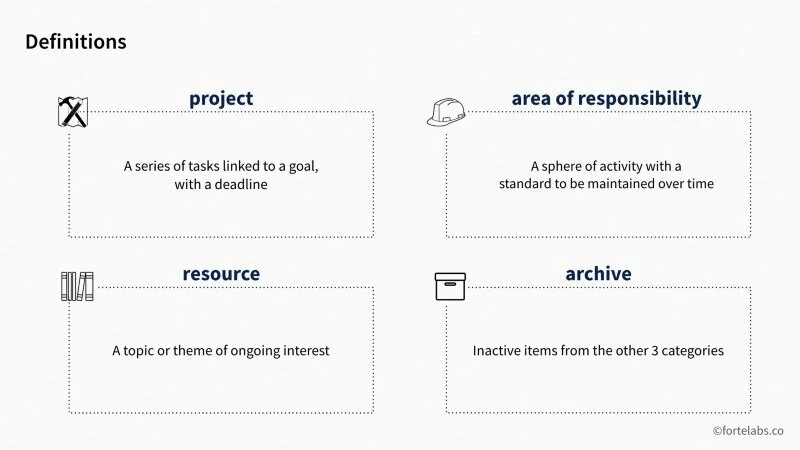
PARA is a principle that’ll help you organize your work digitally.
- Projects: series of tasks linked to a goal, with a deadline.
- Areas: spheres of activity with a standard to be maintained over time.
- Resources: topics or themes of ongoing interest.
- Archives: inactive items from the other three categories.

PROJECTS
A project has a goal to be achieved — a discrete event that will happen, allowing this item to be completely checked.
This goal is supposed to take place at a specific moment in time. It has a deadline or timeframe, whether externally or self-imposed.
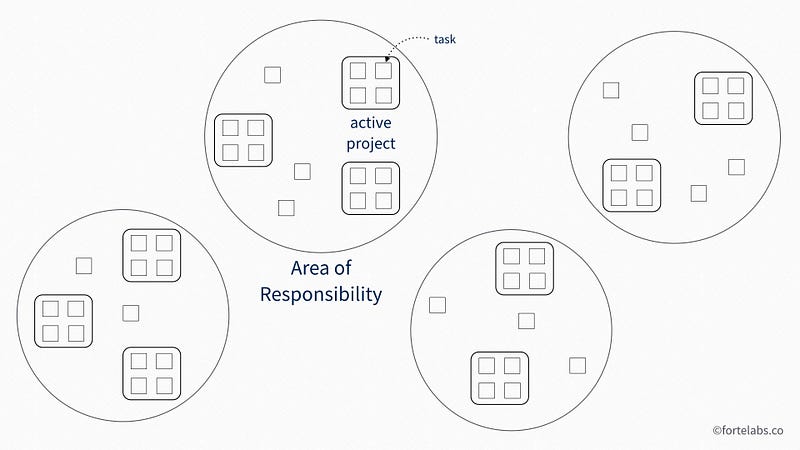
Projects always fall into Areas. A few examples:
- Running a marathon is a project, whereas Health is an area
- Publishing a book is a project, whereas Writing is an area
- A vacation to Thailand is a project, whereas Travel is an area
AREAS
Areas of Responsibility are the roles you take on in life and the hats you wear, the ongoing standards where the buck stops with you, and things that take a certain amount of constant attention.
- Exercise, Finances, Apartment, Pets.
RESOURCES
Resources are interests, themes, and assets.
- Psychology, politics, leadership
- Web design,architecture; note-taking
- Stock photos, typography links
ARCHIVES
Archives are inactive items from the other three categories.
- Projects that have been completed or become inactive
- Areas that you are no longer committed to maintaining
- Resources that you are no longer interested in

WORKFLOW
P.A.R.A. is a dynamic system, not a static one.
It derives its strength not from deeply hierarchical stocks of “knowledge,” which require following strict rules and conventions, but from constantly evolving flows of information between the four categories.