
3 Brilliant Polymaths, and the Advice They Left Behind
 Curated from:
bigthink.com
Curated from:
bigthink.com
Ideas, facts & insights covering these topics:
6 ideas · 6.4K reads
Polymaths and mastery
Polymaths manage to achieve mastery across multiple industries, arts, or fields of study. What sets them apart? The willingness and drive to learn new.
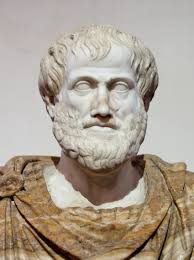
Aristotle (382 BC–322 BC)
A polymath that made fundamental contributions to diverse fields of study, including logic, rhetoric, ethics, physics, story, poetry, government, metaphysics, geology and zoology.
Aristotle believed that we should strive to live a life of moderation, nurturing the virtues within ourselves and avoiding the vices on either extreme end.
Leonardo da Vinci (1452–1519)
H was the father of the High Renaissance style. Da Vinci made contributions to many other fields: urban planning, mathematics, botany, astronomy, invention, history, sculpting and cartography.
- He introduced the idea of painting with aerial perspective (painting faraway objects less distinctly and with less vibrant colors).
- He was also interested in anatomy. He used his skills as an artist to create the Vitruvian Man, a study on body proportion and an exemplar of the intersection of math and art common in the Renaissance era.
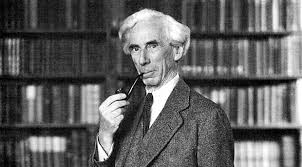
Bertrand Russell (1872–1970)
British Philosopher, logician, mathematician, writer, historian, political activist and Nobel laureate Bertrand Russell made many contributions to the academic world, particularly within mathematical logic and analytic philosophy.
He's perhaps better known to the general public as a social critic, speaking with unflinching clarity on moral issues ranging from warfare to Jesus Christ.
Leonardo Da Vinci on how to be successful
- Action: “It had long since come to my attention that people of accomplishment rarely sat back and let things happen to them. They went out and happened to things.”
- Experiment: “Experience does not ever err. It is only your judgment that errs in promising itself results which are not caused by your experiments.”
- Goal-setting: “Obstacles cannot crush me. Every obstacle yields to stern resolve. He who is fixed to a star does not change his mind.”
- Time prioritization: “Time stays long enough for anyone who will use it.”
- Focus: “As every divided kingdom falls, so every mind divided between many studies confounds and saps itself.”
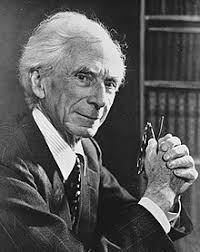
Advice from Bertrand Russell
- Do not feel absolutely certain of anything.
- Do not think it worth while to proceed by concealing evidence, for the evidence is sure to come to light.
- Never try to discourage thinking for you are sure to succeed.
- Do not fear to be eccentric in opinion, for every opinion now accepted was once eccentric.
- Find more pleasure in intelligent dissent than in passive agreement, for, if you value intelligence as you should, the former implies a deeper agreement than the latter.
- Be scrupulously truthful, even if the truth is inconvenient, for it is more inconvenient when you try to conceal it.
- Do not feel envious of the happiness of those who live in a fool’s paradise, for only a fool will think that it is happiness.


