Habits are mental shortcuts
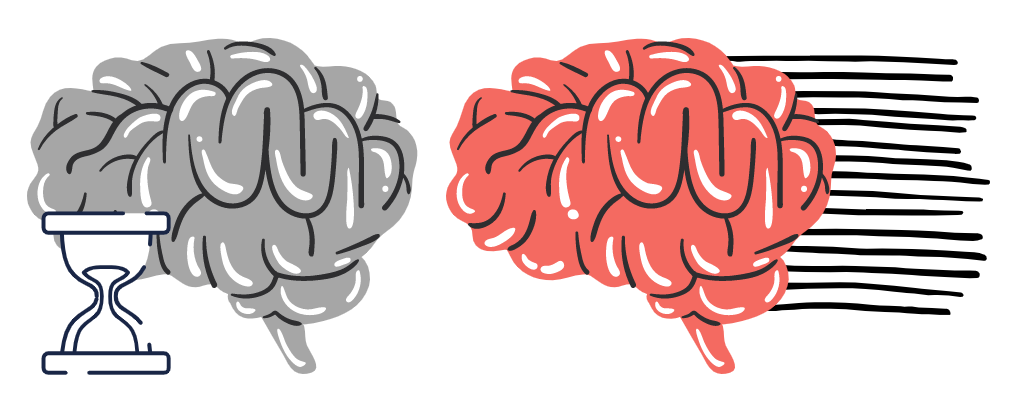
A habit is a routine or behavior that is carried out repeatedly and most of the time automatically.
When you are faced with a problem repeatedly, your brain starts to automate the process of solving it. Your habits are sets of automatic solutions that solve the problems you come across regularly.
Focus on systems, not on goals
Goals are good for establishing a direction, but systems are best for making progress.
Goals are about the results you hope to reach. Systems are about the mechanisms that lead to those results.
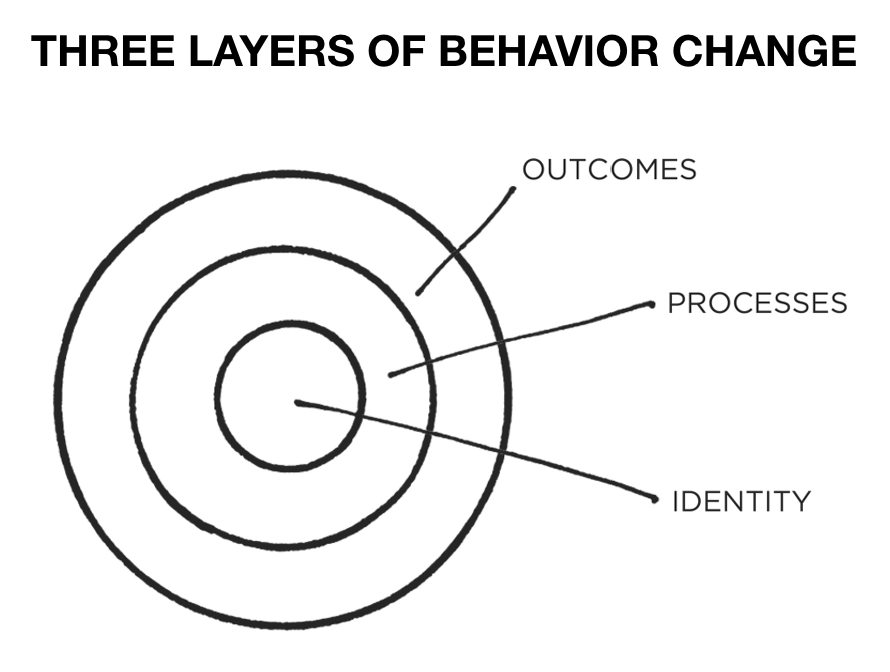
The layers of behavior change
- Changing your outcomes. This means changing your results: losing weight, publishing a book, etc.
- Changing your process. This means changing your habits and systems: for example, developing a meditation practice.
- Changing your identity. This means changing your beliefs: the way you see yourself and the ones around you.
True behavior change is identity change
You could choose and start a habit because of motivation, but you'll stick with it only if it becomes part of your identity.
To change your identity:
- Establish the kind of person you want to be.
- Prove it to yourself with small wins.
How habits work
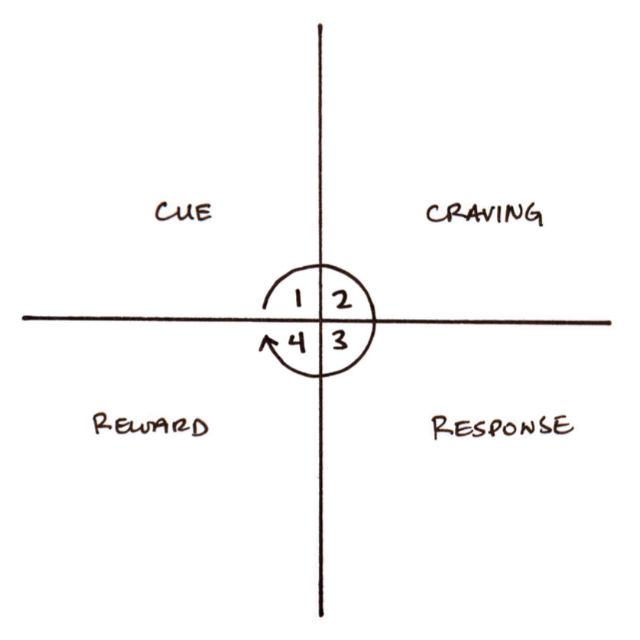
The main components of habit formation:
- A Cue: It causes your brain to begin a behavior. It is a bit of information that predicts a reward.
- A Craving: It is the motivation behind every habit. Without a desire, we don't have a reason to act.
- A Response: This is the very habit you perform; it can take the form of a thought or an action.
- A Reward: The end goal of every habit.
How to create good habits
- Make them evident.
- Make them attractive.
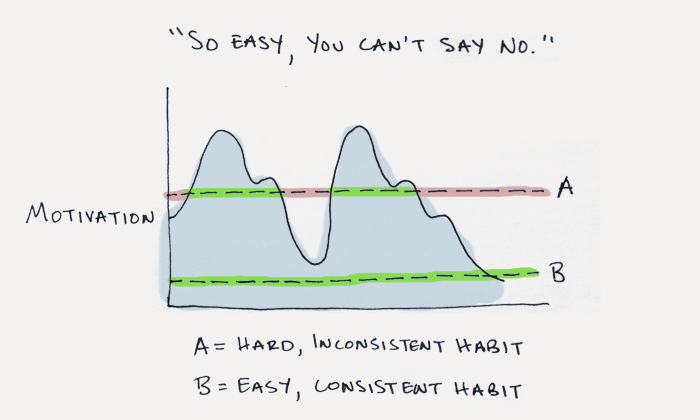
- Make them effortless.
- Make them satisfying.
How to break bad habits
- Make them invisible.
- Make them unappealing.
- Make them hard to perform.
- Make them frustrating.

Self-control is a short-term strategy when forming habits
A better method is to cut bad habits off at the source.
You may be able to resist temptation once, but you will most likely not be able to have the willpower to control your desires each time they appear. Thus, your energy would be better spent optimizing your environment.
We imitate habits to fit it
We imitate the habits of three groups:
- The close. Proximity has a powerful and impressive effect on the way we behave.
- The many. We feel the pressure to comply with the rules of the groups we're part of. Being accepted is the greatest reward.
- The powerful. We are attracted to behaviors that we think will make people respect and admire us.
How to enjoy hard habits
Create a motivation ritual by doing something you really like right before a difficult habit.
Habits are attractive when we associate them with positive feelings and unattractive when we associate them with negative feelings.
The time it takes to form a habit
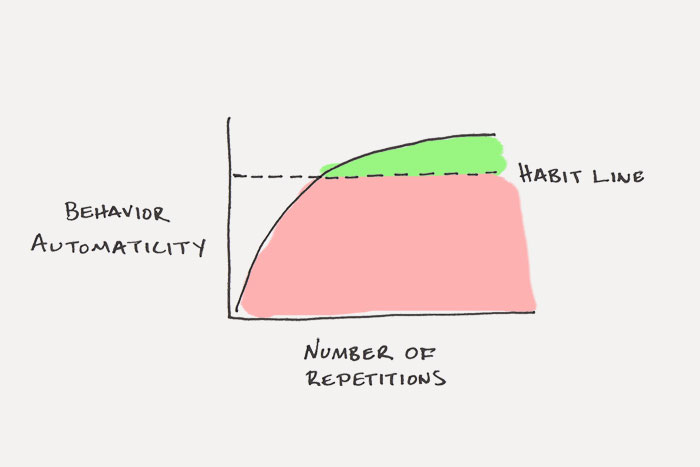
The amount of time you have been performing a habit is not as important as the number of times you have performed it.
You could do something three times in thirty days, or three hundred times. The frequency will always make the difference.
The Law of Least Effort
We will instinctively choose the path that requires the least amount of work.
Diminish the friction associated with positive actions. When friction is reduced, habits become easy. Increase the friction associated with negative behaviors. This way, habits become hard.
The Cardinal Rule of Behavior Change
What is instantly rewarded is done again. What is instantly punished is ditched.
To get a habit to stick you need to feel instantly successful, even if it’s in a small way.

The Goldilocks Rule for staying motivated
We experience peak motivation when we are performing actions that are right on the edge our current abilities.
Not too difficult, not too easy.