
Warren Buffett: How He Does It
Curated from: www.investopedia.com
Ideas, facts & insights covering these topics:
11 ideas · 29K reads
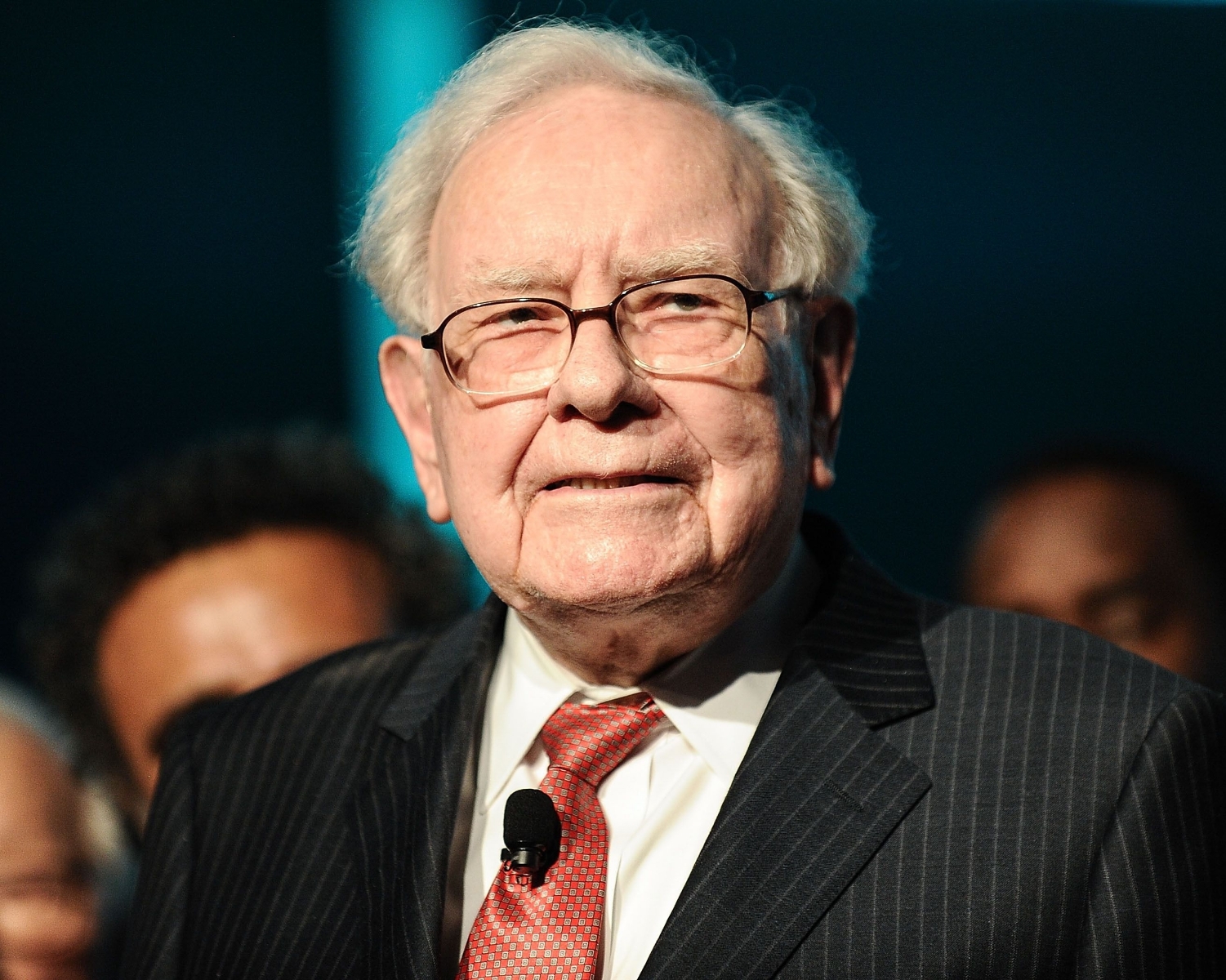
Warren Buffet's Way
Buffett follows the Benjamin Graham school of value investing, which are :
- Look for securities whose prices are unjustifiably low based on their intrinsic worth.
- Look at companies as a whole - company performance, company debt, and profit margins, whether companies are public, how reliant they are on commodities, and how cheap they are.
8.3K reads
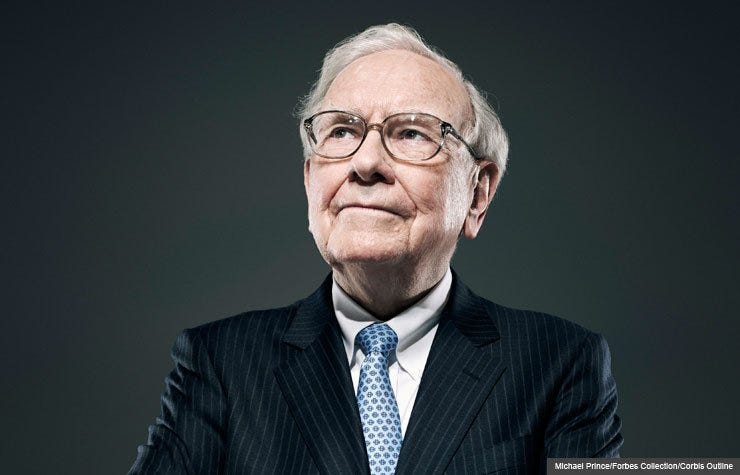
Warren Buffet's Investing Philosophy
- Buffett takes this value investing approach to another level.
- Many value investors do not support the efficient market hypothesis (EMH) . This theory suggests that stocks always trade at their fair value, which makes it harder for investors to either buy stocks that are undervalued or sell them at inflated prices.
- Investors like Buffett trust that the market will eventually favor quality stocks that were undervalued for a certain time.
4.3K reads

Warren Buffett‘s Methodology
- Warren Buffett finds low-priced value by asking himself some questions when he evaluates the relationship between a stock's level of excellence and its price.
- Keep in mind these are not the only things he analyzes, but rather, a brief summary of what he looks for in his investment approach.
3.8K reads

1. Company Performance
- Sometimes return on equity (ROE) is referred to as stockholder's return on investment.
- It reveals the rate at which shareholders earn income on their shares.
- Buffett always looks at ROE to see whether a company has consistently performed well compared to other companies in the same industry.
- ROE is calculated as follows: ROE = Net Income ÷ Shareholder's Equity
- Looking at the ROE in just the last year isn't enough. The investor should view the ROE from the past five to 10 years to analyze historical performance.
2.5K reads

2. Company Debt
- The debt-to-equity ratio (D/E) is another key characteristic Buffett considers carefully.
- Buffett prefers to see a small amount of debt so that earnings growth is being generated from shareholders' equity as opposed to borrowed money.
- The D/E ratio is calculated as follows: Debt-to-Equity Ratio = Total Liabilities ÷ Shareholders' Equity
- This ratio shows the proportion of equity and debt the company uses to finance its assets, and the higher the ratio, the more debt—rather than equity—is financing the company.
1.9K reads

3. Profit Margins
- A company's profitability depends not only on having a good profit margin, but also on consistently increasing it.
- This margin is calculated by dividing net income by net sales.
- For a good indication of historical profit margins, investors should look back at least five years.
- A high-profit margin indicates the company is executing its business well, but increasing margins mean management has been extremely efficient and successful at controlling expenses.
1.6K reads

4. Is the Company Public?
- Buffett typically considers only companies that have been around for at least 10 years.
- As a result, most of the technology companies that have had their initial public offering (IPOs) in the past decade wouldn't get on Buffett's radar.
- He's said he doesn't understand the mechanics behind many of today's technology companies, and only invests in a business that he fully understands.
- Value investing requires identifying companies that have stood the test of time, but are currently undervalued.
- Never underestimate the value of historical performance. This demonstrates the company's ability.
1.4K reads

5. Commodity Reliance
- You might initially think of this question as a radical approach to narrowing down a company. Buffett, however, sees this question as an important one.
- He tends to shy away (but not always) from companies whose products are indistinguishable from those of competitors, and those that rely solely on a commodity such as oil and gas .
- If the company does not offer anything different from another firm within the same industry, Buffett sees little that sets the company apart.
- Any characteristic that is hard to replicate is what Buffett calls a company's economic moat, or competitive advantage.
1.3K reads

6. Is it Cheap?
- This is the kicker. Finding companies that meet the other five criteria is one thing, but determining whether they are undervalued is the most difficult part of value investing. And it's Buffett's most important skill.
- To check this, an investor must determine a company's intrinsic value by analyzing a number of business fundamentals including earnings, revenues, and assets.
- And a company's intrinsic value is usually higher (and more complicated) than its liquidation value, which is what a company would be worth if it were broken up and sold today.
1.1K reads

6. Is it Cheap? (cont.)
- Once Warren Buffett determines the intrinsic value of the company as a whole, he compares it to its current market capitalization - the current total worth or price.
- Sounds easy, doesn't it? Well, Buffett's success, however, depends on his unmatched skill in accurately determining this intrinsic value.
- While we can outline some of his criteria, we have no way of knowing exactly how he gained such precise mastery of calculating value.
1.2K reads
The Bottom Line
- As you've probably noticed, Buffett's investing style is like the shopping style of a bargain hunter.
- It reflects a practical, down-to-earth attitude.
- Buffett maintains this attitude in other areas of his life: He doesn't live in a huge house, he doesn't collect cars, and he doesn't take a limousine to work.
- The value-investing style is not without its critics, but whether you support Buffett or not, the proof is in the pudding.
1.7K reads


