Our Brains Make Us Way Too Optimistic About Meeting Deadlines
 Curated from:
time.com
Curated from:
time.com
Ideas, facts & insights covering these topics:
3 ideas · 17.6K reads
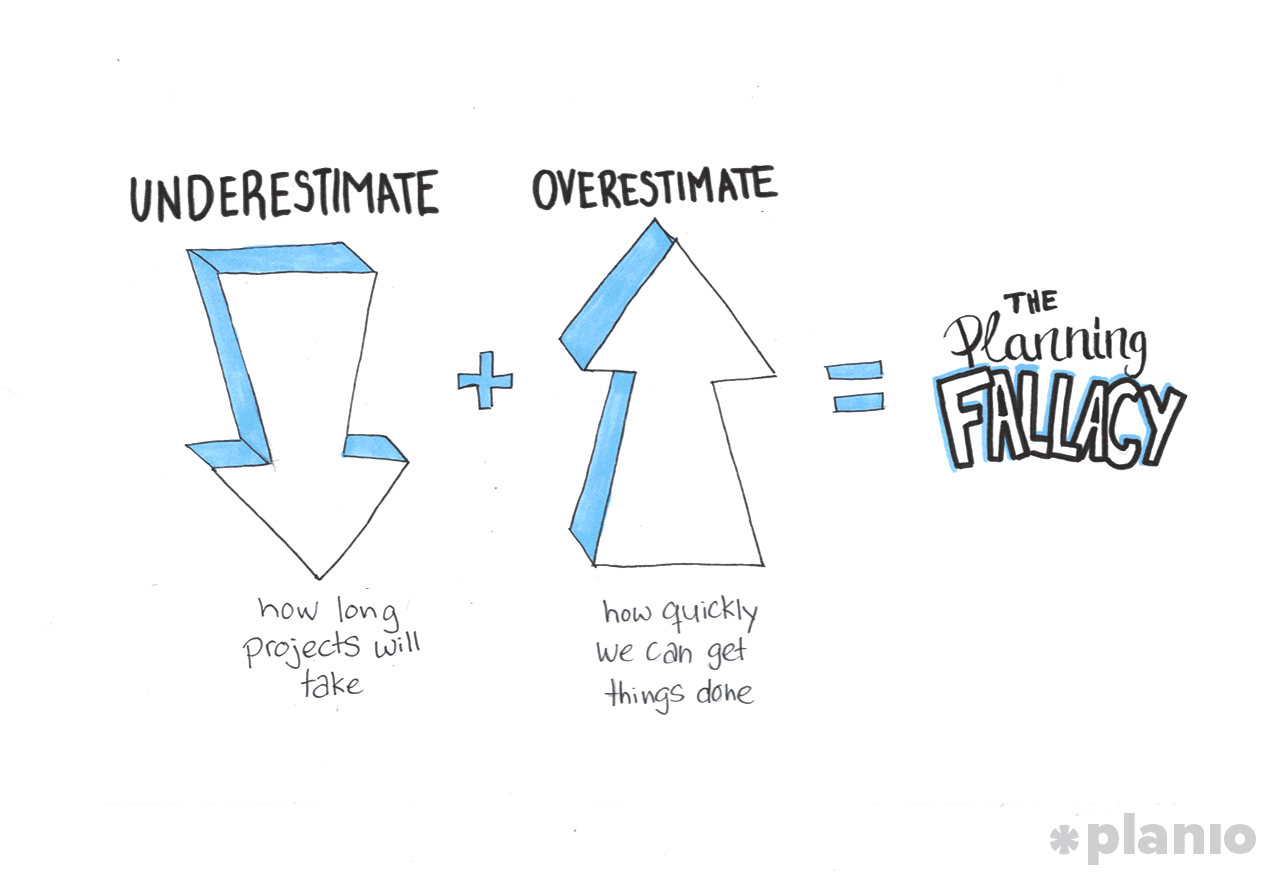
The planning fallacy
The term 'planning fallacy' was coined in 1977 and deals with how most of us are terrible at estimating how long a project will take. We are overly optimistic but terrible at predicting the future. If the project has a budget, we may underestimate that expense too.
The Sydney Opera House was commissioned in 1957 and had an expected completion date of 1963. The budget was 7 million Australian dollars. After the plan had been scaled back, it was completed in 1973 at the cost of $102 million.
Why we trip over the planning fallacy
We are prone to choosing the most optimistic timetable to complete a project while doubting other information that could change our predictions. Even if we are given evidence of how we've been wrong in the past, we believe that our current forecasts are optimistic.
The problem with our predictions is that we treat every task like it's a new problem. Then, we construct a tale of how we will complete this task but ignore the evidence from similar projects done in the past.
Overcoming the planning fallacy
Ignore what you want to be true. Instead, use past experience to build a schedule.
In an experiment, two groups of students had to complete a one-hour computer tutorial. The students had to predict when they would finish the assignment. One group of students were prompted to think about past assignments similar to this one and use that knowledge to inform their prediction. The control group had no instructions. The result was that the first group correctly predicted how long it would take.