The 10 Best Tools to Stay Mentally Sharp at Work
 Curated from:
www.scotthyoung.com
Curated from:
www.scotthyoung.com
Ideas, facts & insights covering these topics:
11 ideas · 89.1K reads
How to maintain peak concentration
During complex tasks, staying sharp can be difficult. When you desperately need to focus, it can be tricky to stop a wandering mind.
However, there are tools we can use to stay alert and power through.
Take "smart" breaks
Taking a break from a problem for a time can lead to a breakthrough. But looking at your email or Facebook can make it harder to return to the task. If you need a break, it is best to take "smart" breaks. These are activities that are relaxing, not distracting.
- Briefly sit with your eyes closed.
- Going for a ten-minute walk
- Stretching or doing push-ups
- Drinking a glass of water
Wean yourself off your phone
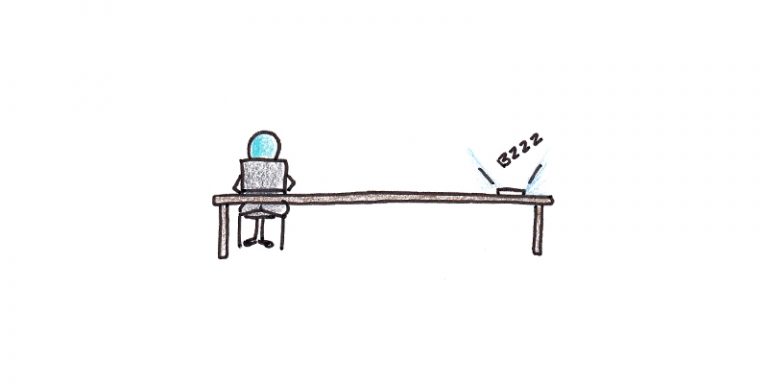
A task can be perceived as effortful when we are really calculating opportunity costs. For attention-demanding tasks, the brain needs to focus on one thing and ignore the rest. Yet, it prefers lower-value activities.
A way to discourage getting stuck on low-value activities is to reduce tempting alternatives.
Shift to the "meta" task
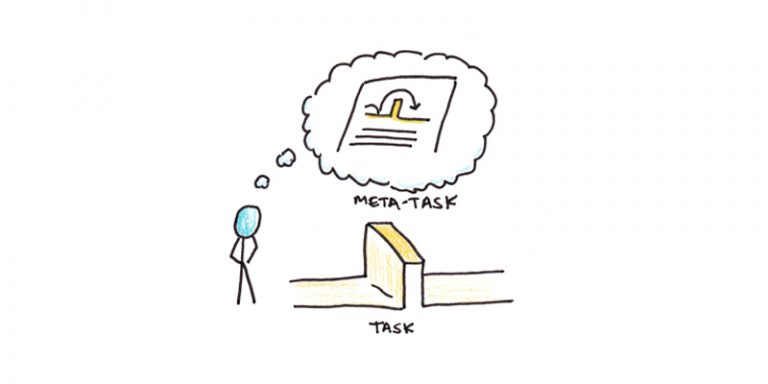
At times, you may get stuck. To get out of it, switch to a "meta" task, meaning shift to a more abstract layer of a problem such as figuring out why you're stuck.
For example, if you are writing an essay and don't know what to write, switching to a meta task would mean writing about how you don't know what to write. This activity can help you articulate your difficulty that could lead to a solution.
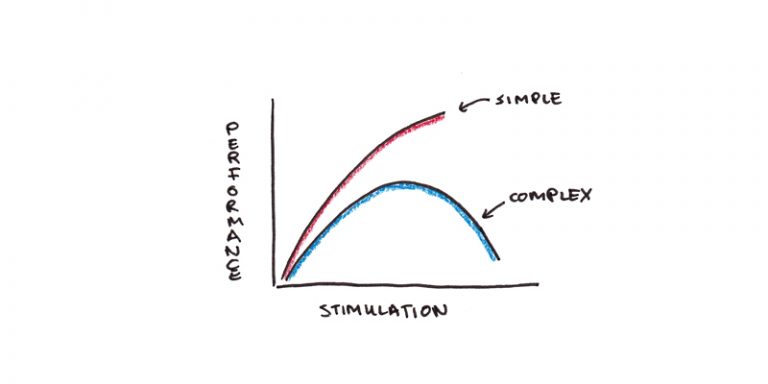
Apply the Yerkes-Dodson Law
The Yerkes-Dodson Law is a U-shaped connection between general arousal and execution. Research found that when an individual is too alert or too relaxed, performance suffers. Simpler tasks benefit from high alertness, while high alertness can hurt the performance of challenging tasks.
This means finding the right degree of stimulation to keep focused, for example, a noisier coffee shop or a quiet library.
Set specific, achievable, short-term goals
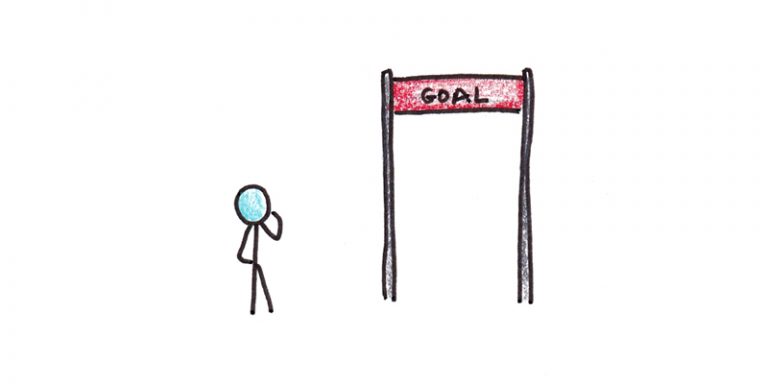
In his research, Edwin Locke found that specific challenging goals created better performance. However, some limitations apply.
- For complex tasks, a goal-oriented approach may slow down performance. For novel tasks, a playful attitude may be more successful.
- Goals only work if they're achievable.
An interruption-free environment
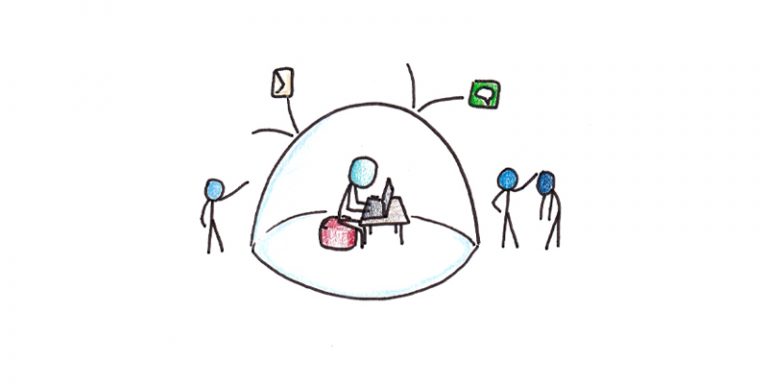
It is challenging to stay focused when you are constantly interrupted. Your boss sending regular emails, a deskmate talking, a three-year-old continually interrupting.
The key to improving focus is to negotiate your environment ahead of time. Communicate what you need and make concessions to keep your relationships smooth.
Find your quitting triggers
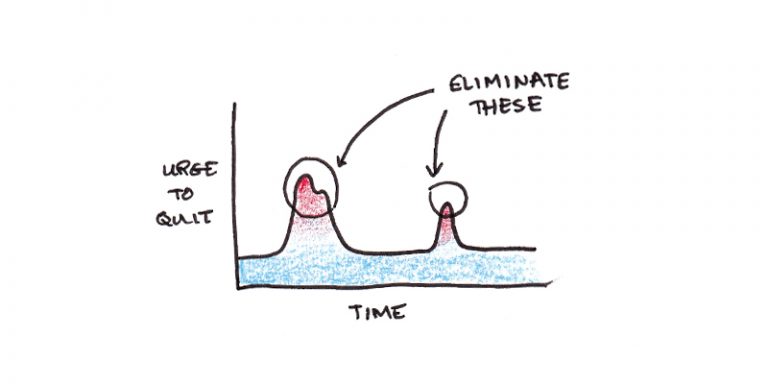
Difficult work can make you want to quit after a few minutes.
However, the urge to give up is seldom constant. The desire to quit arrives at predictable moments. If you can identify those moments, and you can disable them. If you want to give up before you began, set a timer for twenty minutes and only allow yourself to quit when the time is up.
Master the Power Nap
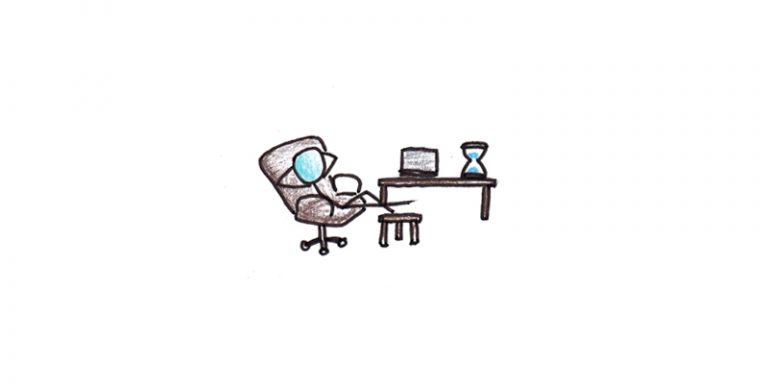
Taking a twenty-minute nap can refresh your mental performance.
The key is to avoid getting into the deeper stages of sleep that cause grogginess.
Minimize mental overhead
Your working memory corresponds closest to a mental bandwidth. It's the things that you're thinking about now. However, working memory is in contrast to long-term memory, which is everything you know and remember.
Working memory is limited. One way to cope with limited working memory is to offload it on paper.
Don't suppress your unwanted thoughts
When it comes to our focus, we may try a task, realise our mind is wandering and correcting ourselves. Except this makes it even harder to focus.
One solution is mindfulness meditation. Let the distraction come and go without paying too much attention to it.