
What Is Motivation? We’ve Probably Been Thinking About It All Wrong
 Curated from:
www.nirandfar.com
Curated from:
www.nirandfar.com
Ideas, facts & insights covering these topics:
13 ideas · 7.7K reads
“I Must Have Lost It On The Wind”
Most people, only have a vague understanding of what motivation really means. We think of it like the wind: it comes and goes and, if I we are lucky enough to catch it in our sails, we can steer our ship toward our goals.
The problem with this thinking is that if the wind isn’t blowing, we’re dead in the water. If we depend on feeling motivated to do what we don’t feel like doing, we’ll never accomplish hard-to-achieve goals.
What Is The Biology Of Motivation?
To understand what motivation is and how to harness it correctly, we have to understand our brains a bit better, starting with the very basics. Why do we have brains, anyway? Plenty of life forms don’t have brains and get along just fine.
Biologists believe the reason creatures evolved brains was to facilitate motion. It’s no coincidence that the word “motivation” stems from the same root as the word “motion.”
The Worthwhile Stimulus - Moving Toward
A fascinating study on freshwater snails found that the creatures could make complex decisions with only 2 brain cells: 1 for sensing the presence of food and 1 to tell the snail whether it’s hungry or not. These two neurons determine, for the snail, whether it’s worthwhile to move in the direction of a potential food source. If the hunger pangs are painful enough, the snail moves toward the food (albeit ever so slowly).
The Aversive Stimulus - Moving Away From
More complex brains evolved to help animals escape what psychologists call an “aversive stimulus”–something that feels uncomfortable. Bears and birds leave the cold of winter by respectively hibernating in warm caves or flying south. When our brains register that discomfort, it spurs us to put on a coat. When it’s too hot, discomfort triggers us to take it off again.
At The Service Of Homeostasis
This seesaw influencing our behavior is an example of homeostasis. It’s the physiological and psychological process our bodies use to keep us level.
The body’s desire to maintain homeostasis governs all sorts of bodily functions, both conscious and unconscious. But when the body can’t regulate itself, our brain spurs us to action. It makes us do something to fix the problem, just like the snail moving toward food when that one brain cell registers hunger pangs.
Motivation Is The Desire To Escape Discomfort
Evolutionarily, our brains are similar to snails’ brains. They’re more complex, sure, but the motivational drive is the same–when we are uncomfortable, we are motivated to restore homeostasis.
Even wanting is its own form of discomfort, which means that what looks like a lack of motivation is often simply someone escaping discomfort in an unhealthy or unproductive way.
Escaping Discomfort Unproductively: An Example
Let’s take, a teenager who spends all their free time playing video games. Despite what their parents may say, it’s not quite right to say they lack motivation. After all, it takes hours of focus and practice to emerge victorious from an epic battle. Rather, the teenager is motivated to play video games because, in them, they find a way to escape boring schoolwork, social pressure, and nagging parents. It’s a quick, easy relief from dealing with discomfort.
That’s the other important thing to remember–humans, like water, seek the path of least resistance.
Instead Of Escaping Discomfort, We Should Leverage It
First, we must realize that discomfort isn’t necessarily a bad thing. Thinking that feeling bad is always bad is an unhelpful notion propagated by clueless self-help gurus and modern-day snake oil salesmen. Discomfort doesn’t always need to be relieved. It can be leveraged like rocket fuel to propel us forward.
Instead of looking for the easiest way to rid ourselves of pain, we can look within to understand what’s driving our desire to escape the way we feel. What are we avoiding when we don’t do the things we really want to do?
Instead Of Escaping Discomfort, We Should Channel It
Second, after identifying the uncomfortable emotional states, we can prepare ourselves for what we will do the next time we experience those negative emotions.
As Nir Eyal details in Indistractable, we can use dozens of well-studied techniques to prepare ourselves for the inevitable urges that can lead to self-defeating behaviors. Practices like the 10-minute rule have been shown to be a highly effective way to master the internal triggers that lead us off track.
The “Implementation Intention”
And finally, we can rely less on our feelings and more on our routines. By deciding in advance how we want to spend our time, according to our values and our schedule, we pave a clear path for our future actions. Instead of depending on motivation, we can do what we said we would by glancing at our calendar.
A distractible person waits for motivation, then doesn’t understand why they fail to accomplish their goals day after day after day. An indistractable person knows why they got distracted and takes steps today to avoid getting distracted by the same thing tomorrow.
The Triad: Homeostasis - Discomfort - Motivation
By finally understanding what motivation really is, and what it is not, we can harness it when we have it and use other methods when it runs dry.
When we realize that every action we take is about a need for homeostasis, we can change our mindset and design our life accordingly.
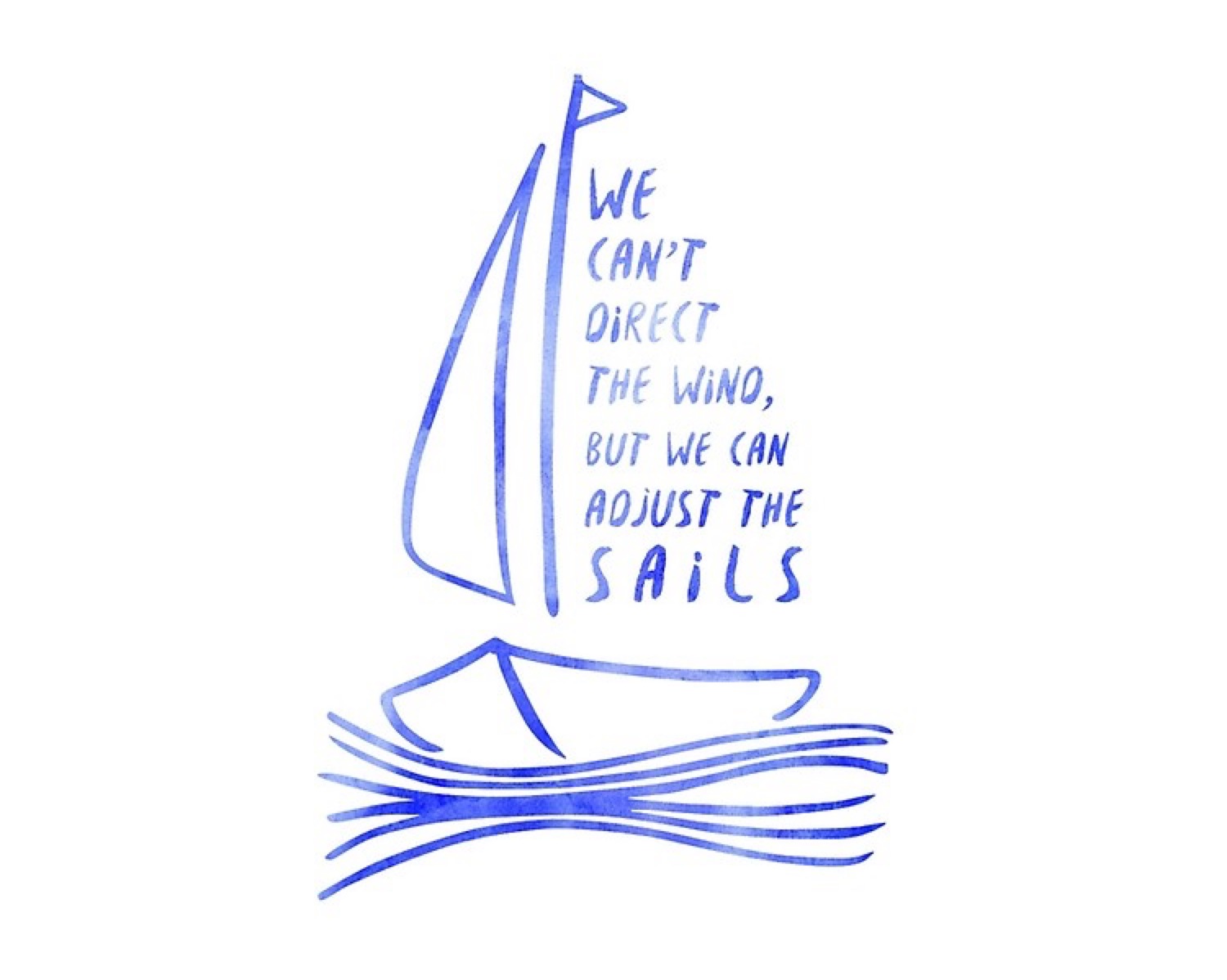
We can’t direct the wind, but we can adjust the sails.
If the wind will not serve, take to the oars.