Mindframing: a personal growth framework
 Curated from:
nesslabs.com
Curated from:
nesslabs.com
Ideas, facts & insights covering these topics:
11 ideas · 810 reads
What is a mind frame?
According to the Merriam-Webster dictionary, a mind frame is a mental attitude or outlook. It’s more than just a mood, it encompasses the particular way someone thinks or feels about something, and deeply influences one’s behaviour.
What do you need to become a master mindframer?
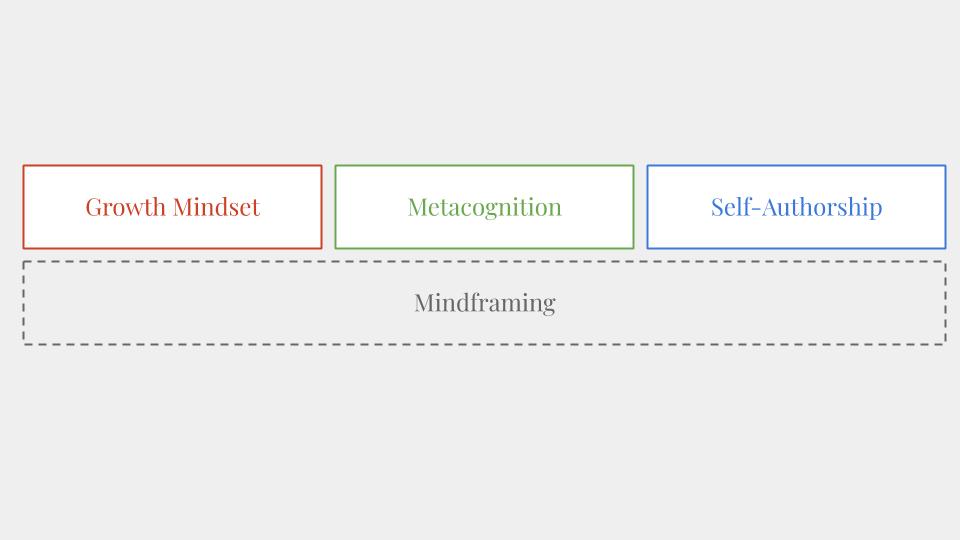
There are three main frames to consider to become a “master mindframer”:
- Growth mindset
- Metacognition
- Self-authorship
In a fixed mindset, people believe their basic qualities, like their intelligence or talent, are simply fixed traits. They spend their time documenting their intelligence or talent instead of developing them.
Growth mindset
“Growth mindset” is such an overused expression, but we’ll have to stick with it until someone comes up with a new one. In this particular case, having a growth mindset means having the deep belief that growing happens through small, incremental steps, rather than big overnight victories.
Metacognition
Metacognition is simply “cognition about cognition”, or simply put “thinking about thinking”. It’s a higher-order skill that allows you to be aware of your own awareness. Metacognition is your knowledge of what you know and don’t know, as well as all the strategies you use for learning and problem-solving. Mnemonic techniques, study plans, productivity tricks, or even how difficult you perceive a task to be, are all part of metacognition.
Self-authorship
Self-authorship is the ability to define and express your own personal authority. It means that you’re not relying on external authority to define your beliefs, values, and social relationships. Instead of relying on external formulas, you are able to rely on your own internal voice to make decisions on a daily basis.
Four steps to the mindframing method
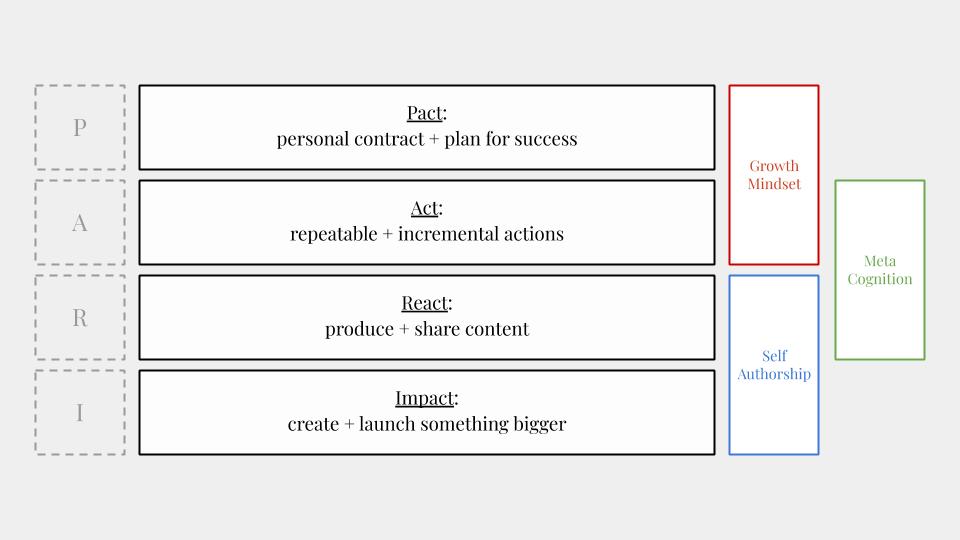
There are four steps to the mindframing method:
- Pact
- Act
- React
- Impact
Which, you may notice, conveniently spells out PARI, which means “bet” in French. How wonderful.
Create a pact
First, you create a pact, either with yourself or with others. I’m personally a big proponent of learning and building in public, but if you feel like you have the mental resilience and emotional strength to keep yourself accountable without sharing your goals with others, that’s fine too. There are also cases where you may not want to build your product in the open for other practical reasons.
You need to act
Second, you need to act. This is usually the hardest part in most learning frameworks, which are complex and require you to go through lots of content in a specific order, study for a predetermined amount of hours per week, then complete some specific assignments. Way to feel discouraged.
With mindframing, you are in control of your learning process. There is no small contribution towards your goal. Each step you take brings you closer to the person you want to become.
You need to react
This is when you start really internalising the concepts you have previously engaged with by creating your own content. I know it can sound daunting to start producing content at this stage. You feel like you’re such a newbie—who are you to share your thoughts about a topic that’s so new to you?
But this is one of the most efficient ways to learn, with the added bonus of helping you connect with people who are also interested in the topic.
Work on a project with imapct
Once you feel familiar enough—which means that you can grasp the concepts and can articulate them, but still feel very uncomfortable using them—you should start creating something bigger. If you’re learning how to code, time to try building your first complex application. If you’re studying ancient history, time to write longer essays about a little-studied topic and submit them to relevant publications. If you’re studying music composition, time to create a collection of original pieces.