
7 Things That Self-Made Billionaires Do Differently
 Curated from:
medium.com
Curated from:
medium.com
Ideas, facts & insights covering these topics:
12 ideas · 176.2K reads
Using Decision Trees
- Understand the different outcomes that could happen (both positive and negative)
- Calculate the expected return or loss of each outcome
- Attach a probability to each outcome
- Understanding the magnitude of the return or loss
- Multiply the probability by the magnitude (probability of winning * value of win) — (probability of losing * cost of the loss)
- Add up and subtract all of the expected returns and losses
- To get started you don’t need to know the exact probabilities. Just following the process will give you unique insights you wouldn’t have had otherwise.
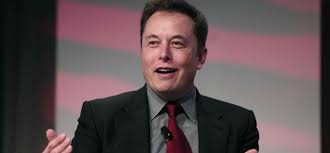
Use Decision Trees
Elon Musk uses decision trees to make big decisions (a tool that uses a tree-like graph or model of decisions and their possible consequences, outcomes, and resources). They are particularly useful for avoiding stupid risks and big bets that aren’t likely to succeed.
Most became a billionaire by making unlikely big bets, as their expected return statistically was much higher than safer bets.
Build Deep, Long-Term Relationships
One of the best ways to get information is not from just being better at searching Google, it’s from learning how to build a network and get the information you need through that network.
This network should include people’s lessons learned and hacks, topics that are too sensitive to talk about because they make someone look bad, and tacit knowledge (knowledge that people have but aren’t able to articulate).

Use Storytelling
Having a powerful vision is essential for all entrepreneurs, but if you are going to excel, your stakeholders need to buy into your vision.
Storytelling is a learnable skill and can help you transmit your vision to such a degree that others feel it’s inevitable and critical. Great stories transport people into another world and, in doing so, alter their beliefs, evoke emotions, and significantly reduce their ability to detect inaccuracies.

Invest In What Will Not Change
Become the best in one core area by continually investing in it over time, rather than jumping from trend to trend and starting over each time.
To apply this principle to your business, identify a core customer need that will likely stay the same (even as technology and culture evolve) to which your company is uniquely positioned to cater, and build your company around it.

Developing An Analytical Advantage
Your analytical skills have to be honed in and this involves frequently brainstorming, preparing for worst-case scenarios and working around your own limitations.

Developing An Information Advantage
- Get close to people who have accomplished what you want to accomplish.
- Learn from other fields and bring insights into your own to find unique perspectives.
- Build a lab, not an experiment. The more experiments you make the more you learn.
- Be good at pulling out the wisdom of others, as many are not able to articulate how they succeed.

Standing Up Against The Herd
We are wired to want to fit in socially, meaning not going against the flow. But courage is a skill that can be practiced by doing little things that cause you to feel uncomfortable and socially awkward, but with zero real negative impact.

Think Independently
Doing what everyone else does is going to bring you average results.
Whenever you’re betting against the consensus there’s a significant probability you’re going to be wrong, so you have to be humble, seek out and understand relevant information and learn to analyze things differently.

Checklist To Avoid Stupid Mistakes
- Brainstorm as much as you can to avoid availability bias (choosing the first solution that comes to mind rather than the best solution).
- Test as many potential solutions as you can afford to. This avoids the confirmation bias of rationalizing the one solution you chose.
- Evaluate the criteria for each experiment.
- Learn from every experiment, successful or not.

Use Checklists To Avoid Stupid Mistakes
Warren Buffett attributes a large part of his success to consistently avoiding preventable mistakes by religiously following basic tenets and ideas he knows will work.
To counteract the often negative influence emotions can have in investment decisions, Buffett uses several checklists, including ones for investing, problem-solving, and psychological biases.

Analyze What Can Go Wrong
Things constantly go wrong no matter how smart and hardworking you are. So, continuously and methodically consider ways a plan could go wrong and plan how to avoid each obstacle.
Make a list of how to fail, so you will be prepared when roadblocks come. Apply this principle by listing the ways the project could fail by probability and prioritizing actions that can be taken to avoid failure.