
Ten smart ways to communicate complex ideas
 Curated from:
cuttingedgepr.com
Curated from:
cuttingedgepr.com
Ideas, facts & insights covering these topics:
10 ideas · 10.9K reads

Data
It comprises the facts without necessarily showing clarity to a situation.
- What do the numbers mean and why should you care? Go past the data to capture the imagination or interest of the audience.
- Make the data actionable. Facilitate cooperation between technical people and communicators.
Logic
Carefully check that the logic of your case is clearly explained. Observation or even intuition can create an initial structure for explaining a complex problem such as an issue.
Pictures
Pictures, visuals and images offer your audience an invaluable way of remembering the relationships between different variables. The right visual offers an easy way to see, internalize and later recall even complicated information.
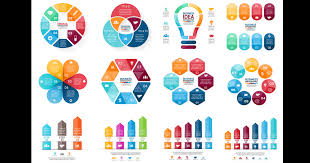
Infographics
Information graphics or data visualization (infographics) are graphic visual representations of information, data or knowledge intended to present information quickly and clearly to a live or online audience.
Infographics are making a big impact in communicating about complex topics, making information eye-catching, shareable and easily digestible.
Stories
Stories that summarize certain logics or relationships between variables are perhaps stickiest of all.
When thinking up stories, don’t be afraid to channel the ridiculous. The dopier the story, the more people may groan—but years later they remember it.
Participation
Tools like data or equations or even stories are of limited value if an audience feels they can’t push back, disagree, or ask for clarification.
The higher the status of your audience, the more important it is to actively create pauses or other spaces where misunderstandings can be voiced and clarification requested.
Metaphors and analogies
See if you can simplify important concepts by using metaphors.
“Think about a cake,” says Scott Johnston, senior vice president of product at Docker, likening the cake part to a server and the icing to a program. “You want to be able to change frosting from chocolate to vanilla. If there’s paper between the two, you can lift up the frosting and replace it.”
Find ways to make it matter to them
We tend to learn best when we’re interested in something – and we’re interested in topics when they relate to us directly.
When you’re trying to explain a complicated topic to an individual, you should seek to find out what matters to them, and then base your approach on those angles.
Use details they already know
Find related information people already know, and expand on that.
The more you can pull from information people already have and analogies they already understand, the better they’ll understand the core concepts you’re showing them.
Leave out unnecessary details
When you understand a concept, you can find it’s all-to-easy to fall into the trap of thinking every detail is important.
Your immediate objective is to get the main points across to help others understand a difficult concept. Describing too many details to others unnecessarily complicates the picture. You can always come back to those details later.