How to Become More Open-Minded
Curated from: www.verywellmind.com
Ideas, facts & insights covering these topics:
11 ideas · 12.9K reads
Having An Open Mind
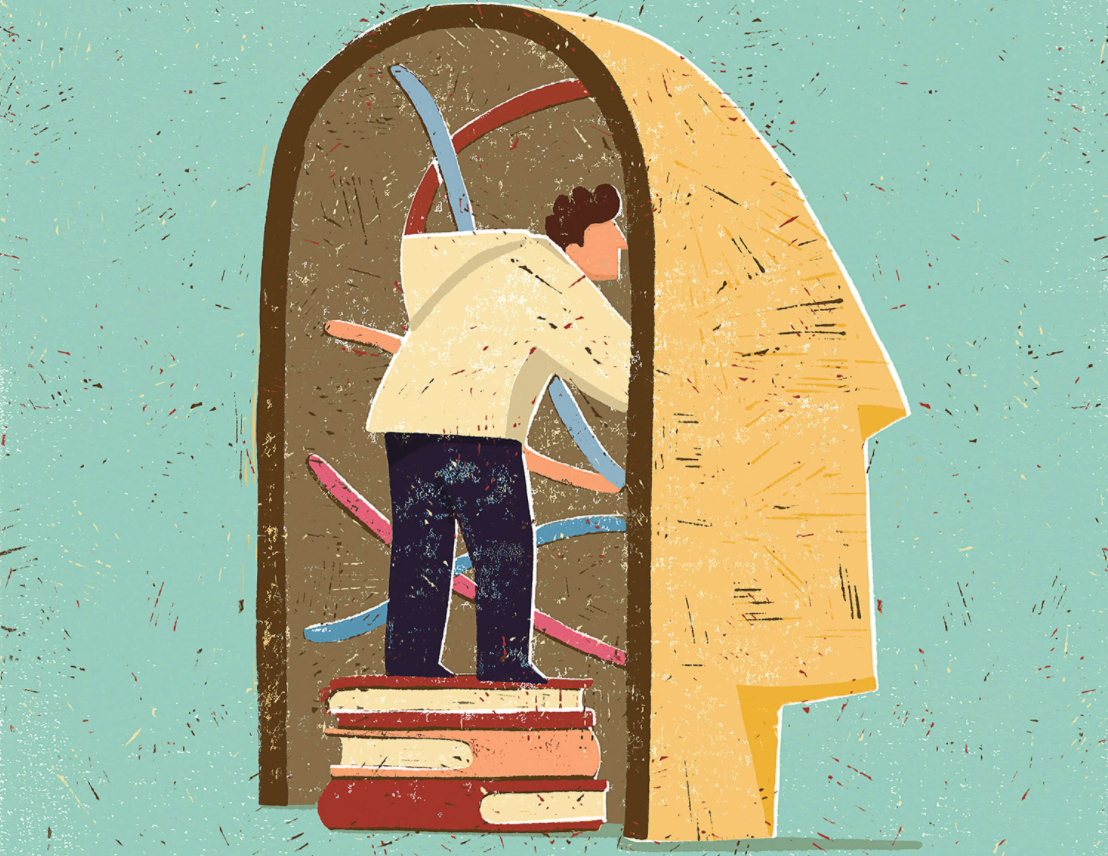
Being open-minded is a quality that makes us receptive to a diverse range of ideas, arguments and perspectives that may not align with our own.
If we are not open-minded, we may not be able to think critically or rationally in any given situation, making us unable to see all aspects of a problem and to come up with a balanced solution.
Closed-Minded People
They are the individuals that only entertain their existing viewpoints, not being receptive to new ideas and previously unknown beliefs.
Having strong beliefs is not an indicator of a closed mind. One can have strong convictions and yet be empathetic towards others who have a different viewpoint.
Cognitive Dissonance
When a new piece of information that we learn from ourselves conflicts with our existing beliefs, and we are unable to deny the authenticity of the new idea, we experience Cognitive Dissonance.
If we are able to revise and update our outdated or incorrect belief patterns, we move towards learning and personal growth.
The Meaning Of Being Open-Minded
Being open-minded is:
- Being tolerant and without any prejudice.
- Being able to consider other’s perspectives and get involved in new experiences.
- Seeking information that challenges one’s beliefs, with a sense of curiosity.
- Being able to agree to disagree and move on without personal differences.
Characteristics Of An Open Mind
- Curiosity about other’s point of view.
- Being able to have their own beliefs challenged.
- Not getting angry when they are proven to be wrong.
- Empathy for others.
- Being able to be in other people’s shoes.
- Being humble about one’s knowledge and skills.
- Giving others space to share their own beliefs and thoughts.
Benefits Of Being Open-Minded
- One is able to gain fresh insights on things that challenge their existing beliefs, expanding our knowledge pool.
- One gets opened up about new experiences and learns new things, eventually growing as a person.
- New ideas and experiences makes one a vibrant and mentally strong person.
- Open-minded people are generally more optimistic.
- One is able to push their boundaries and keep one’s mind engaged and fresh, as one becomes a flowing river instead of a stale pond.
Factors That Influence Openness Of Mind
- The openness of the mind is one of five dimensions of one’s personality, and also includes a willingness to consider new experiences and ideas.
- Being an ‘expert’ in a particular domain has been linked to being closed-minded
- Being comfortable with the feeling of confusion, ambiguity and cognitive inconsistencies.
How To Be Open-Minded
According to psychologist JeanPiaget, being open-minded requires a specific mental process. Our existing body of knowledge is called a ‘schema’, and new information can be sorted and fitted in our various ‘schemas’ by a sort of filing process which is called assimilation.
Sometimes the new information is not able to be categorized and fitted, and we have to adjust our understanding of the world, a process known as accommodation.
Fighting Confirmation Bias
Confirmation bias is when we are focused on only the ideas and information that align with our existing set of beliefs and reject any information that challenges our existing ‘schemas’.
If we become aware of our confirmation bias, we are able to see our lopsided way of evaluating new information, and we then tend to not rush towards readily agreeable information, but towards something that challenges us.
Being Open-Minded Means Asking Questions
We normally question others when they do not fall in line with our belief patterns.
Part of being open-minded is to be able to question yourself whenever new information is encountered. This can be about our existing knowledge, or about the trustworthiness of the source. We can check our own bias and stress-test our existing beliefs.
Intellectual Humility
One may think of oneself as an authority on whatever knowledge has been attained over the years (and assume that our brains are perfect), but one must not fall in the Dunning-Kruger Effect where one’s own knowledge is considered superior and versatile, making them blind towards their own ignorance.
One has to be humble and always in the learning mode, a student for life.