5 thinking tools to add to your metacognitive toolbox
 Curated from:
nesslabs.com
Curated from:
nesslabs.com
Ideas, facts & insights covering these topics:
6 ideas · 17.9K reads
Bloom’s taxonomy of learning
It is a set of three lists used to classify educational learning objectives into levels of complexity and specificity. They concentrate specifically on learning objectives in the cognitive domain (knowledge-based), affective (emotion-based) and psychomotor domains (action-based).
These three models were named after Benjamin Bloom, the author of Taxonomy of Educational Objectives: The Classification of Educational Goals.
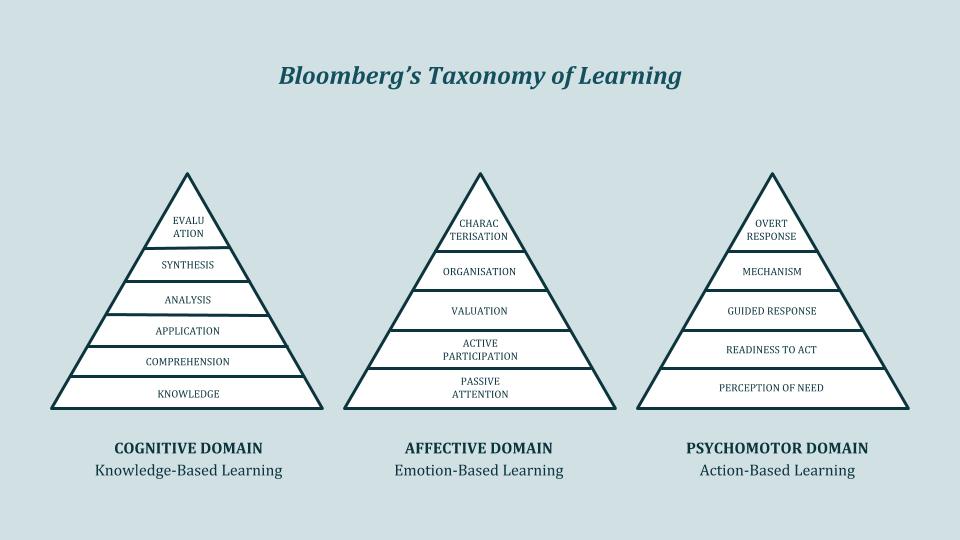
Bloom’s taxonomy: learning objectives
- Knowledge-based objectives. Instead of just memorizing facts, the goal of this area is to be capable to remember, understand, apply, analyze, create, and evaluate our knowledge.
- Emotion-based objectives. This domain measures how much you care about what you are studying: passive attention (the lowest level), active participation, valuation, organization, and characterization (the highest level, where you care enough to generate your own take on the knowledge).
- Action-based objectives. This domain measures your ability to actually manipulate relevant tools.
The DOVE & ROPE rules of brainstorming
DOVE stands for: Deferral of judgment; Off-beat ideas; Vast quantities of ideas; Elaboration/expansion of ideas.
The ROPE method of brainstorming stands for:
- Record all ideas
- Original ideas are encouraged (no stupid ideas)
- Put off evaluation (judgment can be done later)
- Expand on other’s ideas.
CAMPER questions for critical thinking
- What are the consequences of believing this?
- How consistent is the information?
- What assumptions have been made here?
- How accurate is the data or information?
- What is the meaning of this?
- What are the main points?
- What prejudice is being shown here?
- What other points of view could be expressed?
- What evidence is there to support the position or claims?
- What examples are there to back-up the position or claims?
- How relevant is the position or claims?
- How reliable is the information?
The 5 Whys
By repeating the question “why?” five times in a row, you explore the cause-and-effect relationships underlying a particular problem; the primary goal of the technique is to determine the root cause of a problem.
Think-Pair-Share
This method means using a thinking buddy to debug a problem together, then share back what you found with the team.
- Think: each person thinks about the problem and writes down their thoughts.
- Pair: consolidate individual thoughts together.
- Share: share back with the rest of the team.