[SQL] SELECT t.*, COUNT(ut.user_id) AS follower_count FROM d_topic t LEFT JOIN d_user_topic ut ON ut.topic_id = t.id GROUP BY t.id ORDER BY follower_count DESC | Params: [] [SQL] SELECT i.*, u.name AS author_name, u.username AS author_username, u.avatar_url AS author_avatar FROM d_idea i left JOIN d_user u ON u.id = i.user_id WHERE i.is_draft = 0 AND FIND_IN_SET(?, REPLACE(i.hashtags, ',', ',')) ORDER BY i.dt_created DESC LIMIT ? OFFSET ? | Params: ["business",20,20] [SQL] SELECT u.*, COUNT(DISTINCT i.id) AS idea_count FROM d_user u LEFT JOIN d_idea i ON i.user_id = u.id AND i.is_draft = 0 GROUP BY u.id ORDER BY idea_count DESC LIMIT ? | Params: [5] Explore Ideas — Eduo
Eduo
Log in Sign up
How to Gain Unstoppable Self-Confidence
📰 Article

How to Gain Unstoppable Self-Confidence

Habits are a double-edged sword – they can be the reason for our success, our happiness and our fulfilment… or the very things that undermine our confidence and sabotage us from progress. We know from volumes of research that there are specific behaviours that we unknowingly engage in that completely kill out confidence and block our advancement. Having spent countless hours with hundreds of teams from startups to Fortune 500s globally, Shadé Zahrai has observed clear behavioural and cognitive patterns that distinguish those who are successful (and happy) from those who aren’t… and most of the time it comes down to habits. This talk is an eye-opener designed to help you to recognise which self-destructive habits you’ve unknowingly succumbed to, and importantly to know how to climb out of the self-imposed self-doubt traps to reach your highest potential. <br><br>Shadé Zahrai is an award-winning leadership strategist and global peak performance consultant to Fortune 500s. A former commercial lawyer that transitioned to a successful career in banking and strategy consulting, now with her husband she runs Influenceo Global Inc., a leadership development, consulting & research firm that works with some of the world’s largest organisations. Widely respected for her thought leadership and actionable bite-sized personal and professional development content on social media, Shadé has amassed a global community of over 2.6 million followers across platforms and her content has been viewed over 60 Million times. Her and her husband Faysal are passionate about empowering individuals to overcome their self-limits and confidently create a life worth living. This talk was given at a TEDx event using the TED conference format but independently organized by a local community. Learn more at https://www.ted.com/tedx

Personal Development Habits Business
7 ideas 302 reads
Rejected By 70 Investors to Building $5 Billion Unicorn | Asish Mohapatra On Indian Startups | FO 64
📰 Article

Rejected By 70 Investors to Building $5 Billion Unicorn | Asish Mohapatra On Indian Startups | FO 64

Order my first book here: https://amzn.eu/d/eCfijRu<br><br>In this latest episode of Figuring Out Podcast we are in conversation with Asish Mohapatra Co-Founder and CEO of OFBusiness and we have discussed:<br>-How to make a startup profitable from day 1?<br>-Top 4 most profitable business in India<br>-What are the right ways and tools to build a business in India?<br>-7 steps to become successful<br><br>Asish Mohapatra is an Indian entrepreneur, who is the Co-Founder of two unicorns startups in India. Asish has a B. Tech in Mechanical Engineering from the Indian Institute of Technology, Kharagpur, and an MBA in Finance and Marketing from the Indian School of Business, Hyderabad. <br><br>Asish Mohapatra was a venture capitalist with Matrix Partners India for five years before he turned entrepreneur by co-founding OfBusiness in 2015.<br><br>OfBusiness turned unicorn with a $160 mn funding round that came on July 31, 2021, thereby becoming the 18th Indian startup to turn unicorn in 2021. Oxyzo, the lending arm, and a subsidiary of OfBusiness, has also joined the unicorn club in March 2022, after it successfully raised $200 mn in funding, in what has been hailed as India's largest Series A round.<br><br>Watch this episode till the end to know how Asish built OfBusiness from ground zero and his thoughts on profitability vs growth and much more.<br><br>Asish Mohapatra's Social Media Handles ⤵︎<br><br>Instagram @asishmohaps <br>https://www.instagram.com/asishmohaps/<br><br>Twitter @AsishMohapatra1<br>https://twitter.com/AsishMohapatra1<br><br>• • •<br><br>🎧 Stream Figuring Out episodes on Spotify: <br>https://open.spotify.com/show/736rhmW7vilNgkFFo8aDz4<br><br>📺 Watch Figuring Out episodes on YouTube:<br>https://youtube.com/playlist?list=PLE0Jo6NF_JYO5-phess8GKafKMtPv3tfZ<br><br>☑️ Subscribe to Figuring Out Clips:<br>https://www.youtube.com/c/FiguringOutClips<br><br>• • •<br><br>Timestamps:<br><br>00:00 - Introduction<br>03:13 - What content Asish consume?<br>06:13 - How to achieve top in everything?<br>09:20 - How did Asish get inspiration?<br>13:08 - Why doesn't Asish have his own cabin?<br>16:34 - Top 5 principles of Asish Mohapatra<br>21:23 - Why don’t make plan B<br>23:21 - Dhanda approach<br>25:08 - Everyone should be a salesman<br>27:08 - How to build a billion dollar business?<br>36:49 - 4 big billion dollar businesses in India<br>42:55 - Dollar Vs Euro<br>45:00 - How to export?<br>49:08 - How Asish learn business?<br>51:55 - Role model of Asish<br>52:53 - Why was Asish a terrible investor?<br>58:26 - Investment philosophy of Asish<br>59:21 - How I receive investment from Asish<br>1:03:27 - 7 steps to become successful<br>1:07:51 - How to find your passion?<br>1:11:03 - I have stopped celebrating<br>1:14:43 - Why startups fail in India?<br>1:24:07 - Commitment vs Competency<br>1:28:51 - Which business Asish likes the most?<br>1:39:36 - Top 3 business fundamentals<br>1:40:35 - Why should business be complex?<br>1:43:51 - Where does Asish invest?<br>1:46:24 - How to become an alpha?<br>1:56:22 - How to become a better salesman?<br>2:03:39 - Conclusion<br><br>About Raj Shamani<br>Raj Shamani is an Entrepreneur at heart that explains his expertise in Business Content Creation & Public Speaking. He has delivered 200+ speeches in 26+ countries. Besides that, Raj is also an Angel Investor interested in crazy minds who are creating a sensation in the Fintech, FMCG, & passion economy space.<br><br>To Know More,<br>Follow Raj Shamani On ⤵︎<br><br>Instagram @RajShamani<br>https://www.instagram.com/rajshamani/<br><br>Twitter @RajShamani<br>https://twitter.com/rajshamani<br><br>Facebook @ShamaniRaj<br>https://www.facebook.com/shamaniraj<br><br>LinkedIn - Raj Shamani<br>https://www.linkedin.com/in/rajshamani/<br><br>• • •<br><br>#Podcast #FiguringOut #RajShamani<br><br>About Figuring Out<br>Figuring Out Podcast is a Candid Conversations University where Raj Shamani brings raw conversations with the Top 1% in India. Become an exceptional speaker and own any room you enter with your confidence: https://m.rajshamani.com/4UtT

Entrepreneurship Business Startups
11 ideas 891 reads
Everything You Need to Know About Finance and Investing in Under an Hour | William Ackman
📰 Article

Everything You Need to Know About Finance and Investing in Under an Hour | William Ackman

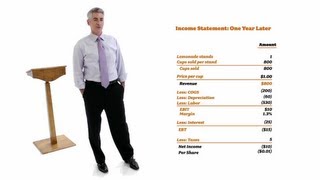
Everything You Need to Know About Finance and Investing in Under an Hour<br>Watch the newest video from Big Think: https://bigth.ink/NewVideo<br>Join Big Think Edge for exclusive videos: https://bigth.ink/Edge<br>---------------------------------------------------------------------------------- <br>Bill Ackman is one of the top investors in the world, and he's said that he's aiming to have "one of the greatest investment track records of all time." As the CEO of Pershing Square Capital Management, the hedge fund he founded, he oversees $19 billion in assets.<br><br>But before he became one of the elite, he learned the basics of investing in his early 20s.<br><br>This Big Think video is aimed at young professionals just starting out, as well as those who are more experienced but lack a financial background.<br><br>Ackman takes viewers through the founding of a lemonade stand to teach the basics, explaining how investors pay for equity, a word interchangeable with "stock." In the example, the owner starts with $750, with $250 of that coming from a loan. <br>---------------------------------------------------------------------------------- <br>WILLIAM ACKMAN:<br><br>William Ackman is founder and CEO of Pershing Square Capital Management. Formed in 2003, the hedge-fund has acquired significant shares in companies such as JC Penney, General Growth Properties, Fortune Bands and Kraft Foods. Ackman advocates strategies of "activist investing," the practice of using stock shares in publicly-traded companies to influence management practices in a way that benefits shareholder interests.<br>---------------------------------------------------------------------------------- <br>TRANSCRIPT:<br><br>Hi, I'm Bill Ackman. I'm the CEO of Pershing Square Capital Management and I'm here today to talk to you about everything you need to know about finance and investing and I'm going to get it done in an hour and you’ll be ready to go.<br><br>How to Start and Grow a Business <br><br>So let’s begin. We’re going to go into business together. We’re going to start a company and we’re going to start a lemonade stand and now I don’t have any money today, so I'm going to have to raise money from investors to launch the business. So how am I going to do that? Well I'm going to form a corporation. That is a little filing that you make with the State and you come up with a name for a business. We’ll call it Bill’s Lemonade Stand and we’re going to raise money from outside investors. We need a little money to get started, so we’re going to start our business with 1,000 shares of stock. We just made up that number and we’re going to sell 500 shares more for a $1 each to an investor. The investor is going to put up $500. We’re going to put up the name and the idea. We’re going to have 1,000 shares. He is going to have 500 shares. He is going to own a third of the business for his $500. <br><br>So what is our business worth at the start? Well it’s worth $1,500. We have $500 in the bank plus $1,000 because I came up with the idea for the company. Now I'm going to need a little more than $500, so what am I going to do? I'm going to borrow some money. I'm going to borrow from a friend and he’s going to lend me $250 and we’re going to pay him 10% interest a year for that loan. <br><br>Now why do we borrow money instead of just selling more stock? Well by borrowing money we keep more of the stock for ourselves, so if the business is successful we’re going to end up with a bigger percentage of the profits. <br><br>So now we’re going to take a look at what the business looks like on a piece of paper. We’re going to look at something called a balance sheet and a balance sheet tells you where the company stands, what your assets are, what your liabilities are and what your net worth or shareholder equity is. If you take your assets, in this case we’ve raised $500. We also have what is called goodwill because we’ve said the business—in exchange for the $500 the person who put up the money only got a third of the business. The other two-thirds is owned by us for starting the company. That is $1,000 of goodwill for the business. We borrowed $250. We’re going to owe $250. That is a liability. So we have $500 in cash from selling stock, $250 from raising debt and we owe a $250 loan and we have a corporation that has, and you’ll see on the chart, shareholders’ equity of $1,500, so that’s our starting point. <br><br>Now let’s keep moving. What do we need to do to start our company? We need a lemonade stand. That’s going to cost us about $300. That is called a fixed asset. Unlike lemon or sugar or water this is something like a building that you buy and you build it. It wears out over time, but it’s a fixed asset. And then you need some inventory. What do you need to make lemonade? You need sugar. You need water. You need lemons...<br><br>Read the full transcript at https://bigthink.com/videos/learn-to-invest-and-start-a-business-in-under-an-hour

Cryptocurrency Economics Money & Investments
8 ideas 1.8K reads
Management Mess to Leadership Success
📰 Article

Management Mess to Leadership Success

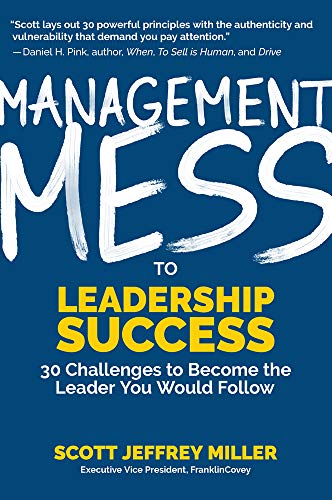
Take The 7 Habits of Highly Effective People to an Entirely New Level Your Leadership Skills Are About to Change. Millions have read the all-time global best seller The 7 Habits of Highly Effective People by Stephen R. Covey. Both leaders and individuals have been inspired and transformed by its universal principles of effectiveness, including Scott Jeffrey Miller. Miller, a student and personal friend of Stephen R. Covey, is now the new millennial voice of FranklinCovey leadership. Scott Jeffrey Miller knows what it’s like to fail. He was demoted from his first leadership position after only three weeks―and that’s just one of several messy management experiences on his two-decade journey to leadership success. Scott’s not alone. Everyone fails. But something sets Scott apart: his transparency and willingness to openly share his story in a way that is forthright, relatable and applicable. Thirty leadership challenges you can apply now. In Miller’s Management Mess to Leadership Success you’ll find 30 leadership challenges that can, when applied, change the way you manage yourself, lead others, and produce results. The wisdom in Scott’s book was learned through hard knocks and was honed by Stephen R. Covey and the FranklinCovey team through years of research and corporate training experience. Illustrated with Scott’s real-life experiences, these challenges will teach you how to: • Lead difficult conversations and celebrate success • Inspire trust, actively listen, and challenge paradigms • Put the right people in the right roles • Create a clear and actionable vision for your team • Accomplish your organization’s Wildly Important Goals® • Get the right results―in the right way • Become the leader you would follow Fans of The 7 Habits of Highly Effective People who have read and liked Radical Candor, Dare to Lead, and Mastering Leadership will love Scott Miller’s Management Mess to Leadership Success: 30 Leadership Challenges to Be The Leader You Would Follow.

Corporate Culture Business Books
9 ideas 12 reads
Become A Self Taught UI/UX Designer in 2023
📰 Article

Become A Self Taught UI/UX Designer in 2023

Do you really need traditional design school in 2023 to become a UI/UX designer? The answer is no — and in this video we dive into the 5 step process you can follow to become a self taught UI/UX designer in 2023.<br><br>📕 Show Notes 📕<br><br>A collection of resources to get started with UI design:<br><br>Uber Case Study by Bre Huang: https://www.bestfolios.com/casestudy/uberscootersplatform<br>Design Thinking, Essential Problem Solving 101: https://www.interaction-design.org/literature/article/design-thinking-essential-problem-solving-101-it-s-more-than-scientific<br>How Pepsi’s CEO Used Design Thinking To Solve Problems: https://hbr.org/2015/09/how-indra-nooyi-turned-design-thinking-into-strategy<br>How To Use Design Thinking To Make Great Things Happen: https://hbr.org/2015/09/design-for-action<br>Tim Brown Talks About Design Thinking (A Real Classic): https://www.youtube.com/watch?v=UAinLaT42xY<br>Principles in Visual Design: https://www.nngroup.com/articles/principles-visual-design/<br>A Collection of Best Practices in UI Design: https://www.checklist.design/<br>Mobile Design Inspiration: https://mobbin.com/<br>Website Design Inspiration: https://lapa.ninja<br>A Portfolio With UX Focused Case Studies: https://www.moritzoesterlau.de/ <br>A Real Problem Solving Focused Portfolio: https://lukejamestaylor.com/<br>A Very Senior UX/UI Designer Portfolio: https://buzzusborne.com/<br>A More UI-Centric Portfolio: http://www.jonathanpatterson.com/A Visually Focused Portfolio: https://www.itsjosie.com/<br>Nicely Formatted Resource on Standing Out: https://www.scienceofpeople.com/stand-out/<br><br>➡️ Figma Crash Course Playlist: https://youtube.com/playlist?list=PLOIq79MWqv84BLdSq8avEj5mMtxT2zWLE<br><br>➡️ Subscribe To The Channel HERE: https://www.youtube.com/c/TimGabeDesign<br><br>#figma #figmatutorial<br><br>➡️ QUESTION — Have a question about UI, UX or Product Design? Designing in Figma? Or Anything Else? Post in the comments section of this video—I’m happy to answer!

Career Learning & Education Problem Solving
7 ideas 1.3K reads
Everything You Need to Know About Finance and Investing
📰 Article

Everything You Need to Know About Finance and Investing

Everything You Need to Know About Finance and Investing in Under an Hour<br>Watch the newest video from Big Think: https://bigth.ink/NewVideo<br>Join Big Think Edge for exclusive videos: https://bigth.ink/Edge<br>---------------------------------------------------------------------------------- <br>Bill Ackman is one of the top investors in the world, and he's said that he's aiming to have "one of the greatest investment track records of all time." As the CEO of Pershing Square Capital Management, the hedge fund he founded, he oversees $19 billion in assets.<br><br>But before he became one of the elite, he learned the basics of investing in his early 20s.<br><br>This Big Think video is aimed at young professionals just starting out, as well as those who are more experienced but lack a financial background.<br><br>Ackman takes viewers through the founding of a lemonade stand to teach the basics, explaining how investors pay for equity, a word interchangeable with "stock." In the example, the owner starts with $750, with $250 of that coming from a loan. <br>---------------------------------------------------------------------------------- <br>WILLIAM ACKMAN:<br><br>William Ackman is founder and CEO of Pershing Square Capital Management. Formed in 2003, the hedge-fund has acquired significant shares in companies such as JC Penney, General Growth Properties, Fortune Bands and Kraft Foods. Ackman advocates strategies of "activist investing," the practice of using stock shares in publicly-traded companies to influence management practices in a way that benefits shareholder interests.<br>---------------------------------------------------------------------------------- <br>TRANSCRIPT:<br><br>Hi, I'm Bill Ackman. I'm the CEO of Pershing Square Capital Management and I'm here today to talk to you about everything you need to know about finance and investing and I'm going to get it done in an hour and you’ll be ready to go.<br><br>How to Start and Grow a Business <br><br>So let’s begin. We’re going to go into business together. We’re going to start a company and we’re going to start a lemonade stand and now I don’t have any money today, so I'm going to have to raise money from investors to launch the business. So how am I going to do that? Well I'm going to form a corporation. That is a little filing that you make with the State and you come up with a name for a business. We’ll call it Bill’s Lemonade Stand and we’re going to raise money from outside investors. We need a little money to get started, so we’re going to start our business with 1,000 shares of stock. We just made up that number and we’re going to sell 500 shares more for a $1 each to an investor. The investor is going to put up $500. We’re going to put up the name and the idea. We’re going to have 1,000 shares. He is going to have 500 shares. He is going to own a third of the business for his $500. <br><br>So what is our business worth at the start? Well it’s worth $1,500. We have $500 in the bank plus $1,000 because I came up with the idea for the company. Now I'm going to need a little more than $500, so what am I going to do? I'm going to borrow some money. I'm going to borrow from a friend and he’s going to lend me $250 and we’re going to pay him 10% interest a year for that loan. <br><br>Now why do we borrow money instead of just selling more stock? Well by borrowing money we keep more of the stock for ourselves, so if the business is successful we’re going to end up with a bigger percentage of the profits. <br><br>So now we’re going to take a look at what the business looks like on a piece of paper. We’re going to look at something called a balance sheet and a balance sheet tells you where the company stands, what your assets are, what your liabilities are and what your net worth or shareholder equity is. If you take your assets, in this case we’ve raised $500. We also have what is called goodwill because we’ve said the business—in exchange for the $500 the person who put up the money only got a third of the business. The other two-thirds is owned by us for starting the company. That is $1,000 of goodwill for the business. We borrowed $250. We’re going to owe $250. That is a liability. So we have $500 in cash from selling stock, $250 from raising debt and we owe a $250 loan and we have a corporation that has, and you’ll see on the chart, shareholders’ equity of $1,500, so that’s our starting point. <br><br>Now let’s keep moving. What do we need to do to start our company? We need a lemonade stand. That’s going to cost us about $300. That is called a fixed asset. Unlike lemon or sugar or water this is something like a building that you buy and you build it. It wears out over time, but it’s a fixed asset. And then you need some inventory. What do you need to make lemonade? You need sugar. You need water. You need lemons...<br><br>Read the full transcript at https://bigthink.com/videos/learn-to-invest-and-start-a-business-in-under-an-hour

Economics Corporate Culture Money & Investments
8 ideas 2.4K reads

Are you sure?